
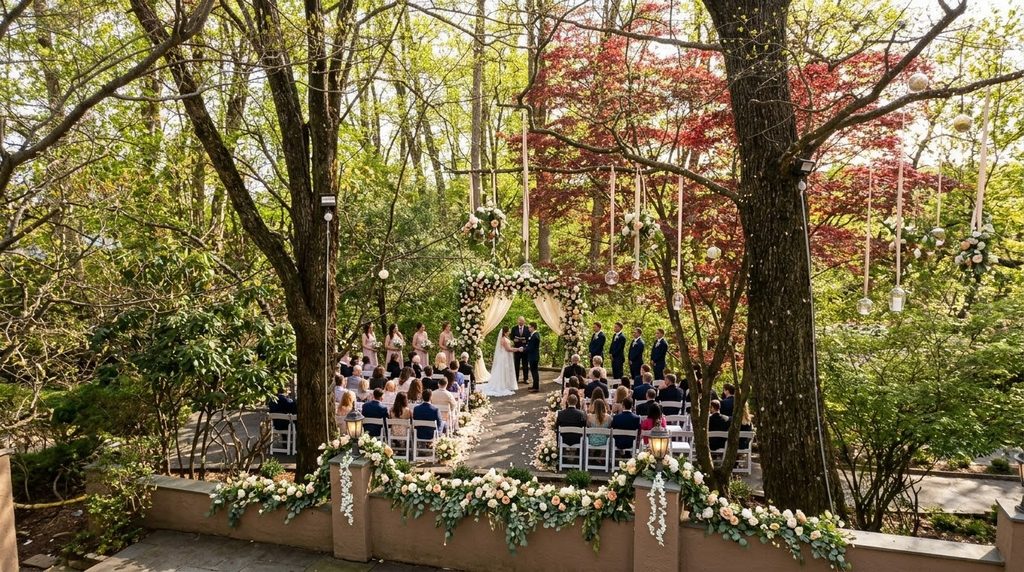
A spring garden wedding brings together two things that naturally belong side by side: a meaningful celebration and a landscape waking up for the season. Fresh greenery, seasonal flowers, softer temperatures and longer daylight create a setting that needs surprisingly little decoration to feel special.
But a beautiful garden alone doesn’t guarantee a great outdoor wedding. The best spring celebrations use the landscape strategically, so ceremony placement, flowers, seating, lighting, food, photography and weather planning all work together. Instead of transforming the garden into something else, let the surroundings become part of the design. Here’s how to make the most of everything spring offers, especially if you’re planning a garden wedding in New Jersey.
Why Choose a Spring Garden Wedding?
Spring creates a backdrop that’s hard to reproduce indoors. Trees fill with leaves, gardens gain color, seasonal flowers become available and outdoor spaces turn inviting again. For couples who want an elegant wedding without an overly formal feel, a garden strikes a natural balance.
A garden setting can also carry several stages of the day: a ceremony on the lawn or terrace, cocktails in an outdoor space, then dinner outdoors or in an adjoining reception room. That movement keeps the wedding feeling dynamic without asking guests to travel between venues.
Design Ideas for a Spring Garden Wedding
1. Let the Garden Be the Main Decoration
Before building your floral and décor plan, study the venue’s natural focal points: mature trees, flowering shrubs, garden beds, fountains, gazebos, pathways and views. These can decide where the ceremony, cocktail tables, lounge furniture and photo areas go.
If your ceremony faces an already beautiful garden, an enormous floral installation may be unnecessary. A simple arrangement that frames the couple without blocking the view often looks more sophisticated. For more on why the setting matters more than added décor, read why wedding guests remember the venue more than the decorations.
2. Choose Seasonal Spring Flowers
Popular spring wedding flowers include tulips, ranunculus, anemones, sweet peas, daffodils, lilacs, peonies, hyacinths and flowering branches. Availability depends on location, weather and your exact date, so work with your florist instead of assuming a particular bloom will be ready.
Seasonal flowers can appear in:
- Bouquets and boutonnieres
- Ceremony arrangements and aisle accents
- Cocktail tables and bar displays
- Reception centerpieces
- Welcome and escort-card displays
- Cake decoration
You don’t need flowers on every surface. Put them where they’ll have the most impact.
3. Build Your Palette Around the Landscape
Spring often means pastels like blush, lavender, pale yellow, peach, cream, soft blue and green, but deeper accents such as burgundy, navy or plum can add contrast and sophistication. The easiest approach is to look at what will naturally be in bloom at your venue during your wedding month. If the garden is mostly green, neutral table settings let the landscape lead. If colorful flowers fill the grounds, pull a few of those shades into your stationery, linens and bouquets. The garden becomes your starting point rather than something to compete with.
4. Use Natural Materials
Garden settings pair beautifully with materials that feel connected to the outdoors: wood, stone, linen, ceramic, glass, woven textures and greenery. Try wooden tables with simple linens and seasonal centerpieces, menus with botanical illustrations or place cards on handmade paper. The goal isn’t a literal garden theme everywhere, but texture that carries the outdoor atmosphere into every detail.
5. Add Personal Garden Details
Personalization turns a beautiful venue into your venue for the day. Consider welcome signs with botanical artwork, menus inspired by seasonal ingredients, table names based on meaningful flowers or places, or escort displays woven with greenery. Small details that say something about the couple often have more emotional impact than large installations.
Ceremony Ideas for a Spring Garden Wedding
6. Frame the Ceremony With What’s Already There
The ceremony is often a garden venue’s biggest visual moment. Before ordering a traditional arch, look for features that can frame it: a mature tree as a dramatic backdrop, a gazebo or pergola to define the altar, a fountain to add depth to photos or flowering shrubs for natural color.
Then check the practical side: where the sun will be, wind exposure, accessibility, sound and whether every guest can see. Beauty matters, but function decides whether guests can enjoy the ceremony.
7. Make the Aisle Part of the Garden
An outdoor aisle doesn’t need to look like an indoor one moved onto grass. Existing paths, flower beds, hedges or rows of chairs can define it with little extra décor. If you want more, add understated arrangements, petals, lanterns or small floral clusters. Consider the walking surface too. Grass, gravel, stone and uneven paths affect footwear and accessibility, and a stable aisle runner can make the walk easier for everyone.
Cocktail Hour and Reception Ideas
8. Plan a Garden or Terrace Cocktail Hour
After the ceremony, guests need somewhere to go while the reception space is prepared. A terrace, patio or courtyard makes an ideal cocktail-hour setting. Create several gathering spots instead of crowding everyone around one bar, mix high-top tables for mingling with lounge seating for those who prefer to sit, place food and drinks so guests explore the space, and add acoustic music that sets the mood without drowning out conversation.
9. Connect Indoor and Outdoor Spaces
A spring garden wedding doesn’t have to happen entirely outdoors. A venue that pairs gardens with an indoor reception space gives you flexibility: ceremony outside, cocktails on the terrace, dinner inside, then back outdoors for dessert or photos. The transitions should feel natural, without long walks, awkward stairs or disconnected areas. Learn what to look for in our guide to wedding venue layout, and compare formats in garden wedding venue vs ballroom.
10. Create Comfortable Lounge Areas
Garden weddings encourage movement, so guests need places to sit, especially during cocktail hour when reception tables may not be set. Sofas, upholstered chairs, benches and shaded seating clusters add visual interest and give older relatives, guests in formal shoes and parents with young children a comfortable spot away from the main entertainment.
11. Consider Outdoor Dining
If weather and venue rules allow, dining outdoors can define a spring celebration. Long communal tables create a dinner-party feel, while round tables suit larger guest lists. Keep centerpieces in proportion, since the garden already provides plenty of visual interest, and plan lighting that can take over as dinner moves toward sunset.
Food and Cake Ideas
12. Serve a Spring-Inspired Menu
Carry the season into the menu with fresh vegetables, herbs, salads, lighter entrées and seasonal fruit, confirming with your caterer what will actually be available. Signature cocktails with citrus, berries, cucumber, herbs or floral notes fit the setting, and infused waters, botanical lemonades and iced teas are especially welcome outdoors. Deciding on service style? Compare plated dinner vs buffet vs food stations.
13. Design a Garden-Inspired Cake
Fresh or sugar flowers, botanical details, delicate piping, fruit or subtle greenery can tie the cake to the garden. Heat, humidity, sun and insects all affect cakes outdoors, so discuss display timing and storage with your baker and venue. Often the smartest move is displaying the cake outside briefly for photos, then keeping it somewhere temperature-controlled.
Lighting and Photography Ideas
14. Transform the Garden After Sunset
Daylight does the work in the afternoon, but evening needs another layer. String lights can define dining areas, lanterns can line pathways, candles add warmth to tables and accent lighting can highlight trees, fountains or architecture. Practical lighting matters just as much: steps, paths, entrances, parking and indoor-outdoor transitions all need to be clearly visible so guests move safely.
15. Plan Around Natural Light
Light shapes outdoor photography, so set your ceremony time with your photographer and venue rather than on its own. A spot that looks beautiful at noon can look very different a few hours later. Think about where the sun will be during the ceremony, cocktail hour, portraits and dinner, since harsh midday sun affects both comfort and photos.
Sunset changes a lot through spring. In Bridgewater, it moves from roughly 7:54 p.m. at the start of May to after 8:20 p.m. by the end of the month, so check the exact time for your date. A garden property can also offer varied portrait spots without leaving the celebration: flowering beds, tree-lined paths, terraces, architectural details and indoor spaces. Ask your venue which locations photograph best in your wedding month.
Spring Weather Prep for an Outdoor Wedding
Spring in Central Jersey can be delightful and unpredictable on the same day. Near Bridgewater, normal highs are around 63°F in April and 73°F in May, with lows near 39°F and 48°F, and rain is possible throughout the season.
| Weather Factor | How to Prepare |
| Temperature swings | Shade for warm afternoons, heaters or indoor access for cool evenings, and a note to guests about layers |
| Rain | An indoor or covered backup that holds every guest, with a set decision deadline |
| Wind | Weighted signage, secured linens, protected candles and stable ceremony structures |
| Soft or muddy ground | Ask about drainage, and add flooring or mats near entrances, bars, dining and restrooms |
A rain plan shouldn’t feel like a last resort. The backup should be a setting you’d genuinely be happy to use. For month-by-month weather, daylight and bloom guidance, read the best wedding month in Bridgewater, NJ, and build your backup with our outdoor wedding rain plan for NJ.
How to Choose a Spring Garden Wedding Venue in New Jersey
Look beyond promotional photos and think about the whole guest experience. Ask what will realistically be blooming in your wedding month, and tour at about the same time of year if you can. Then ask the practical questions:
- Where does cocktail hour happen, and where do guests dine?
- How close are restrooms and parking?
- Are pathways accessible for older guests?
- Where will photos be taken?
- What happens if temperatures drop or it rains?
A strong venue answers both the romantic and the practical questions. Bring our wedding venue tour checklist, and read more about nature-first outdoor wedding trends.
Spring Garden Weddings at Martinsville Gardens
Martinsville Gardens in Bridgewater Township sits on nearly nine acres of landscaped grounds in the Watchung Mountains, overlooking the Washington Valley. Guests arrive along a landscaped driveway with a flower-filled fountain and a gazebo, natural backdrops for spring ceremonies and portraits. The newly renovated venue pairs an outdoor terrace for ceremonies and cocktails with a grand ballroom for receptions, so you can enjoy the garden without depending on perfect weather.
Spacious bridal suites, custom setups for themed food trucks or a ceremonial mandap, and dedicated event coordinators help shape the day around your plans. Explore weddings at Martinsville Gardens, learn more about the venue, browse spring celebrations in the gallery, download the pricing guide or schedule a tour. Thinking about where to invest your budget? Read luxury wedding vs expensive wedding.
Spring Garden Wedding Checklist
- ☐ Ceremony location, sun direction and guest visibility
- ☐ Seasonal flowers confirmed with your florist
- ☐ Outdoor seating and shade
- ☐ Indoor backup for every outdoor element
- ☐ Wind and temperature plans
- ☐ Lighting for after sunset
- ☐ Accessible pathways and ground conditions
- ☐ Catering, power and restroom logistics
- ☐ Photography locations and timing
Frequently Asked Questions
What is the best month for a spring garden wedding in Bridgewater, NJ?
May usually offers the best balance for a spring garden wedding in Bridgewater, with fresh greenery, seasonal blooms, normal highs around 73°F and long evenings, as sunset moves past 8:20 p.m. by month’s end. Late April can bring early spring character but more variable weather. No month is weather-proof, so plan a full indoor backup either way.
Can a garden wedding be formal?
Yes. Formality comes from attire, catering, service, entertainment, lighting and table design, not from whether the ceremony is indoors. A garden wedding can be anything from a relaxed afternoon celebration to a black-tie evening, and pairing an outdoor ceremony with a ballroom reception is an easy way to combine both.
Making Nature Part of the Celebration
A garden can shape the whole rhythm of a wedding. Guests arrive through landscaped grounds, watch the ceremony under open skies, enjoy drinks on a terrace, pose among spring flowers and watch the setting change as daylight fades, a progression that’s hard to recreate in a single event room.
The best spring garden weddings treat nature as a design partner, then add thoughtful touches: seasonal flowers, a palette drawn from the landscape, comfortable lounge areas, a spring-inspired menu, warm lighting and seamless indoor-outdoor flow. Pair that with solid weather planning and guests can simply enjoy the beauty you chose.
Martinsville Gardens
1801 Washington Valley Road, Martinsville, Bridgewater Township, NJ 08836
973-221-6450 | contact@martinsvillegardens.com | Schedule a Tour