
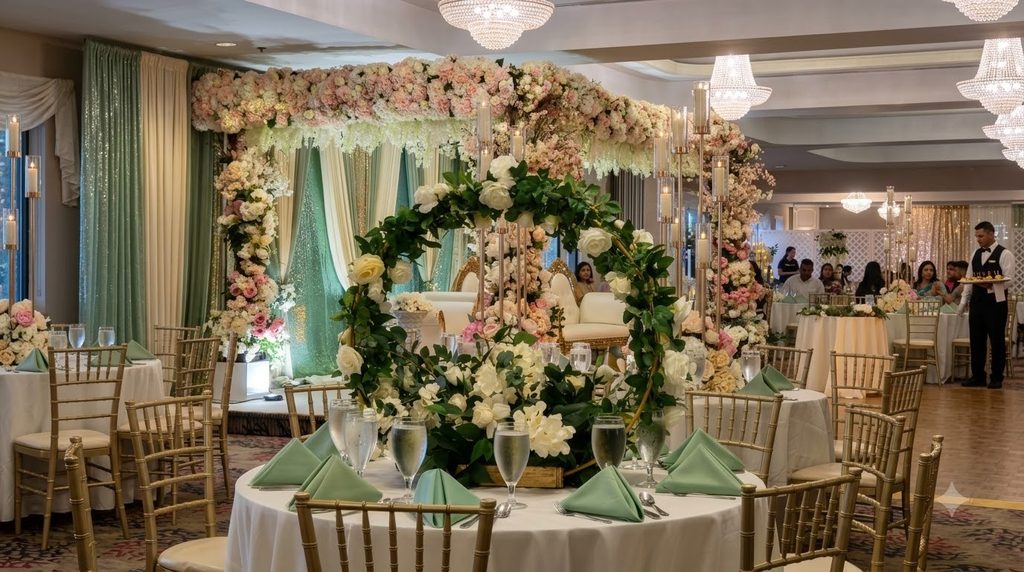
A wedding may begin for guests when the ceremony starts, but vendors often begin hours earlier. Tables need positioning, florals need installation, sound needs testing, catering areas need preparation, and finished spaces may need photography before guests arrive.
A wedding vendor setup timeline defines when each team arrives and the order in which the event is built. There is no universal three-hour or four-hour rule. Access depends on the venue, guest count, design, vendor scope, loading conditions, setup complexity and vendor dependencies.
The better question is: when does each vendor need access so every space is guest-ready on time?
Quick Answer: How Early Should Wedding Vendors Arrive?
Wedding vendors should arrive early enough to complete unloading, setup, testing, final adjustments, and any work that depends on another vendor before guests enter the space.
A useful formula is:
Required access time = unloading + setup + vendor dependencies + testing or finishing + buffer
A DJ who needs 90 minutes to install equipment should not be scheduled exactly 90 minutes before guest arrival. That estimate may not include unloading, cable routing, sound checks, troubleshooting, or movement between spaces.
Likewise, a florist placing prepared centerpieces may need far less time than a team constructing an arch or hanging installation on site.
Start With the Guest-Ready Deadline
Do not begin by assigning random arrival times. Work backward from the moment each space must be finished.
If your ceremony begins at 5:00 PM and guests start arriving at 4:30 PM, the ceremony space should be ready before 4:30. If the photographer needs 20 minutes to capture untouched décor, the practical completion deadline may be closer to 4:00.
Apply the same logic to cocktail hour and the reception. This creates a true production timeline rather than a list of vendor arrival guesses.
Sample Vendor Load-In Timeline for a 5:00 PM Ceremony
A hypothetical wedding might follow this sequence:
| Time | Activity |
|---|---|
| 9:00 AM | Major rentals or production load-in begins |
| 10:00 AM | Tables, chairs, staging and large structures positioned |
| 11:00 AM | Décor and larger floral installations begin |
| 12:00 PM | DJ, lighting or AV team begins load-in |
| 12:30 PM | Catering receives prep access where required |
| 1:00 PM | Centerpieces, linens and smaller décor installed |
| 2:30 PM | Audio, microphone and lighting tests |
| 3:00 PM | Place settings, signage, cake and finishing details |
| 3:30 PM | Photography captures completed spaces |
| 4:00 PM | Final walkthrough, corrections, cleanup and reset |
| 4:30 PM | Guest-facing areas ready |
| 5:00 PM | Ceremony begins |
Final timing should always be confirmed with every vendor.
Rentals and Décor Usually Set the Foundation
For weddings using outside rentals or elaborate décor, these teams are often among the first to need access.
They may handle tables, chairs, linens, staging, ceremony structures, dance floors or decorative installations. Their timing matters because other vendors may depend on them. If tables or structures are late, florals and finishing details can be delayed.
Think of setup as a chain. The earliest vendor is often the one whose work unlocks everyone else.
Floral Setup Depends on Design Complexity
There is no reliable universal arrival time for florists because floral scope varies dramatically.
A team delivering bouquets and preassembled centerpieces has a different workload from a team building a ceremony arch, hanging florals, staircase installations, sweetheart-table arrangements and bar décor.
Ask the florist:
- Which pieces arrive finished?
- Which installations must be constructed on site?
- What needs to be in place first?
- Does temperature or sunlight affect placement?
- Who moves ceremony florals?
- Does the team return for breakdown?
DJs, Bands, Lighting and AV Need Testing Time
Entertainment setup is more than unloading speakers.
Teams may install ceremony audio, microphones, speakers, DJ equipment, uplighting, dance-floor lighting, projectors, monitors, special effects or staging. Bands may require additional instruments and sound-check time.
The critical word is testing.
Microphones should be checked before the ceremony. Speaker levels should be adjusted before guests enter. Outdoor audio should be tested in the actual ceremony environment. Lighting should be reviewed after installation.
Confirm unloading locations, electrical availability, sound restrictions, equipment routes, and when sound checks may occur.
Catering Access Depends on the Service Model
Catering can begin long before cocktail hour.
A catering team may need time for food preparation, storage, service stations, staff briefing, table preparation and back-of-house organization. The dinner format you choose, whether plated, buffet or food stations, also changes how much setup the catering team needs inside the reception space.
The timeline changes depending on whether catering is in-house or outside. An in-house team may already understand service routes and event flow, while an outside caterer may need additional coordination.
Confirm kitchen access, prep space, refrigeration, unloading areas, equipment availability, waste procedures and breakdown requirements.
Photographers Need Finished Spaces, Not Setup Time
Photographers and videographers usually do not need hours to build equipment inside the ballroom, but they often need access before guests.
They may photograph the empty ceremony space, centerpieces, stationery, cake, sweetheart table, signage, architectural details and reception room before it is disturbed.
This creates a hidden deadline. If guests enter the reception room at 6:30 PM and the photographer needs 25 minutes for room details, décor cannot realistically be scheduled to finish at 6:30. The room needs to be completed earlier.
Build photography into the setup timeline instead of treating it as something that happens afterward.
Vendor Dependencies Are the Real Scheduling Problem
One of the biggest mistakes is planning each vendor independently.
Consider this sequence:
Rentals → linens → décor → florals → place settings → photography → guest entry
If rentals run late, linens and florals may be delayed, and photography can lose its clean-room window.
Ask every vendor: “What must be completed before you can do your job efficiently?” Those answers reveal the dependencies controlling the schedule.
Venue Access Means More Than an Opening Time
A venue may say vendor access begins at 10:00 AM, but that does not necessarily mean every team is working inside the event space at 10:00.
Loading may involve designated entrances, limited parking, stairs, elevators, shared zones or vehicle restrictions.
Before finalizing arrivals, understand where teams unload, how equipment enters, whether installations face restrictions, and whether appointments or insurance documentation are required.
Planning Vendor Access at Martinsville Gardens
Martinsville Gardens is located at 1801 Washington Valley Road in Martinsville, within Bridgewater Township. The venue spans nearly nine acres in the Watchung Mountains and includes remodeled indoor and outdoor event spaces, landscaped grounds, a gazebo, terrace and grand ballroom.
Martinsville Gardens describes itself as a banquet and catering venue. The venue also accommodates custom setups such as themed food trucks or a ceremonial mandap. Elements like these add their own load-in and setup steps, so include them in your dependency chain from the start.
For a wedding at Martinsville Gardens, couples should confirm current vendor access rules directly with the event team before distributing a final timeline.
Do not assume a generic online schedule reflects the property’s actual loading procedures, catering workflow, sound-check rules or access windows. Instead, confirm where each vendor enters, which spaces are available at which times, what the venue provides, and when guest-facing areas must be complete.
That venue-specific information should become the backbone of the final schedule. Because the ceremony and reception can take place on one property, vendors can also work from one base instead of moving between separate locations.
Build Buffer Into the Setup Schedule
A timeline with no unused minutes is not efficient. It is fragile.
Traffic delays happen. Installations take longer than expected. Weather changes outdoor plans, so review your outdoor wedding rain plan before finalizing vendor timing. A microphone fails. A delivery arrives in the wrong order.
Create a guest-ready deadline earlier than actual guest entry whenever practical.
That buffer can absorb cleanup, boxes, last-minute décor corrections, sound checks, lighting adjustments, photography or place-setting fixes.
The goal is not to finish at the last possible second. The goal is to make the venue feel completely ready before guests see it.
Questions to Ask Before Finalizing the Timeline
Ask your venue:
- What is the earliest vendor access time?
- Where do vendors unload?
- Can rentals arrive the previous day?
- Is overnight storage available?
- Are there installation restrictions?
- When may DJs or bands test sound?
- When does catering receive access?
- Are outside vendors subject to insurance requirements?
- What time must guest-facing spaces be finished?
- When must breakdown and load-out end?
These answers are more useful than asking only, “How early can vendors arrive?” Our wedding venue tour checklist covers more questions to ask during your site visit.
Wedding Vendor Setup Timeline FAQ
How many hours before a wedding should vendors arrive?
There is no universal number. Arrival times depend on the vendor’s work, venue rules, event complexity, setup dependencies, and the time the space must be guest-ready.
Who usually arrives first?
Rental, production or décor teams are often early when other vendors depend on furniture, staging, structures or room setup. The actual first vendor depends on the wedding.
How early should a florist arrive?
It depends on whether florals are delivered finished or constructed on site. Large arches, hanging installations and extensive ceremony décor require more venue time than prepared centerpieces.
How early should a DJ arrive?
A DJ needs enough time to unload, install equipment, route cables, test microphones and speakers, and solve technical problems before guests enter.
Does a mandap need extra setup time?
Usually, yes. A ceremonial mandap is a structure that must be installed and decorated before guests arrive, and other décor or floral work may depend on it. Confirm its setup window with both the venue and your décor team.
Build the Timeline Backward, Not Forward
A strong wedding vendor setup timeline begins with the guest-ready deadline and works backward through photography, finishing details, florals, décor, entertainment testing, catering preparation, rentals and infrastructure.
The most important question is not how early every vendor can arrive. It is whether the right vendor can enter the right space at the right time, with everything they depend on already in place.
For couples planning at Martinsville Gardens, confirm current property-specific access procedures with the venue team and align every outside vendor around those requirements.
When access, sequencing, testing and buffer time are planned together, the behind-the-scenes work becomes almost invisible. Guests simply arrive to a ceremony space that feels finished, a reception room that looks intentional, music that works, florals that are fresh, and service that is ready.
Planning a wedding at Martinsville Gardens? Download our Pricing Guide or contact our team at 973-221-6450 or contact@martinsvillegardens.com to schedule a tour and review vendor access for your date.