
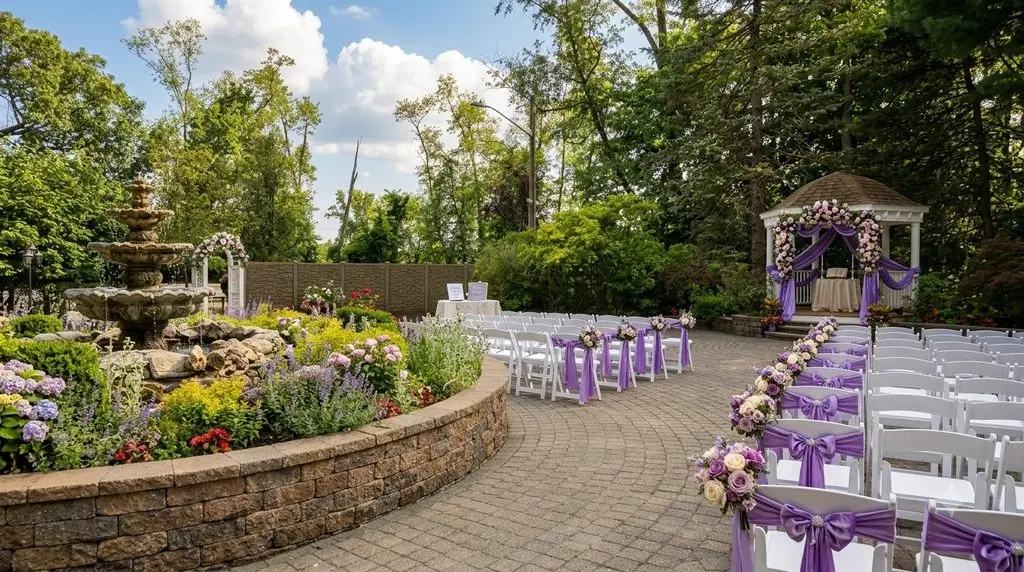
An outdoor wedding creates a beautiful atmosphere with natural surroundings, open skies, and memorable photo opportunities. However, every couple planning an outdoor ceremony in New Jersey needs one important question answered:
What happens if the weather changes?
A successful outdoor wedding rain plan is not simply having a backup room available. It requires a complete strategy that explains where the ceremony moves, who makes the decision, how quickly the transition happens, what guests experience, and what additional costs may apply.
Rain is not the only concern. Outdoor weddings can also be affected by:
- Strong winds
- Lightning
- Extreme heat or cold
- Wet walking surfaces
- Unsafe outdoor equipment conditions
- Décor limitations
The right backup plan should protect the wedding experience without making Plan B feel like a compromise.
For couples comparing wedding venues in New Jersey, two common solutions are:
- Dedicated indoor ceremony backup
- Ballroom room flip
Both options can work. The best choice depends on the venue layout, staffing, timeline, guest count, and level of preparation.
Is a Dedicated Backup Better Than a Room Flip?
A dedicated indoor backup space is usually easier to manage because the ceremony location is already prepared separately from the reception.
A room flip can also work successfully when the venue has:
- Enough transition time
- Experienced staff
- Storage space
- Clear responsibilities
- A realistic timeline
The important factor is not the name of the plan.
The important factor is whether the venue can clearly explain:
- Where the ceremony moves
- When the decision is made
- Who manages the transition
- How guests are guided
- What additional costs may apply
A useful way to evaluate any outdoor wedding rain plan is the CLEAR Test:
| Test | What It Means | Question To Ask |
| Call | Weather decision process | Who decides and when? |
| Location | Backup ceremony space | Where exactly does the ceremony move? |
| Execution | Transition process | Who handles every setup change? |
| Access | Guest movement | Can everyone move safely? |
| Rates | Financial impact | What extra costs can happen? |
If any answer is unclear, the rain plan is incomplete.
Dedicated Indoor Backup vs Room Flip
Dedicated Indoor Backup
A dedicated backup means the ceremony moves into another indoor location that is already available.
Advantages:
- Less pressure on the timeline
- No major room transformation
- Guests move directly to the ceremony
- Reception setup remains protected
- Less visible vendor activity
This option is usually easier for couples who want a smooth transition.
Ballroom Room Flip
A room flip means the same space is used for multiple purposes.
Example:
- Ballroom setup for ceremony
- Guests move to cocktail hour
- Staff converts the room into reception layout
- Guests return for dinner and dancing
Advantages:
- Maximizes venue space
- Can maintain a cohesive design
- May allow couples to use their preferred ballroom
However, it requires much more coordination.
The Biggest Mistake: Choosing a Backup Plan Without Seeing It
Many couples ask:
“Does the venue have a rain plan?”
The answer alone is not enough.
You need to see:
- The actual backup location
- The ceremony layout
- Seating arrangement
- Guest movement path
- Décor placement
- Sound setup
A room that works for 150 guests may not work the same way with:
- Large floral installations
- Cultural ceremony structures
- Additional seating needs
- Photography requirements
- Entertainment equipment
A backup plan should be designed around your actual wedding.
Step 1: Decide Who Makes the Weather Call
A strong weather plan has one clear decision-maker.
Ask the venue:
- Who makes the final decision?
- How early is the decision made?
- What weather conditions trigger a move indoors?
- Can the couple request an earlier transition?
- Who informs vendors?
- Who informs guests?
Avoid waiting until guests are arriving.
A last-minute decision creates problems because:
- Chairs may already be outside
- Décor may be installed
- Equipment may need relocation
- Vendors may need additional time
The weather decision should happen early enough for the team to create a polished experience.
Safety Comes Before Preference
A couple may be comfortable with light rain, but venues must consider:
- Lightning
- Strong winds
- Unsafe surfaces
- Electrical risks
- Guest safety
Lightning especially requires clear safety procedures.
Outdoor structures such as:
- Tents
- Gazebos
- Decorative shelters
should not automatically be considered safe lightning protection.
Ask the venue about:
- Lightning policies
- Wind restrictions
- Heat plans
- Emergency communication
- Equipment safety
A strong venue plan protects guests before protecting the original design.
Step 2: Tour the Exact Backup Location
Never finalize an outdoor ceremony without seeing the backup space.
Walk through the space and ask:
Ceremony Setup Questions
- Can all guests sit comfortably?
- Does the aisle fit the processional?
- Can the ceremony structure fit?
- Can photographers work properly?
- Can guests hear clearly?
- Are accessibility needs covered?
Guest Comfort Questions
Check:
- Restrooms
- Temperature control
- Seating
- Walking paths
- Elderly guest access
- Wheelchair access
The answer should not simply be:
“The ballroom fits everyone.”
The question is:
“Does the ballroom fit our complete ceremony experience?”
Martinsville Gardens Weather Planning Considerations
Martinsville Gardens describes outdoor ceremony settings, indoor reception spaces, bridal suites, and customizable event layouts. These options provide flexibility for different wedding designs.
However, couples should confirm their exact backup plan directly with the venue.
Important questions include:
- Which indoor area becomes the ceremony location?
- Is the reception space already prepared?
- Is a room flip required?
- Where does cocktail hour happen?
- How much transition time is needed?
- Are additional labor charges involved?
The final proposal and contract should be treated as the source of truth.
Step 3: Understand the Room Flip Process
A room flip should never be described only as:
“The staff will handle it.”
A successful flip requires a detailed timeline.
The team may need to:
- Remove ceremony chairs
- Move décor
- Reset tables
- Install linens
- Adjust lighting
- Set entertainment equipment
- Prepare the dance floor
- Inspect the completed room
Ask:
| Stage | Question |
| Weather decision | When does the move begin? |
| Setup | Who handles each task? |
| Cocktail hour | Where do guests wait? |
| Final inspection | Who approves the room? |
| Reception opening | When can guests enter? |
A room flip works only when every responsibility is assigned.
Protect Your Décor Design
Outdoor ceremonies often include:
- Floral arches
- Mandaps
- Aisle arrangements
- Rugs
- Signage
- Lighting elements
Ask:
- Can décor be safely moved indoors?
- Who moves each item?
- Is additional labor required?
- Are indoor installations allowed?
- Are candles or hanging décor restricted?
A good strategy is creating a Plan B design intentionally.
Your indoor ceremony should feel like another version of your wedding, not a rushed replacement.
Protect Sound and Photography
Weather changes affect production.
Confirm:
Sound
Ask:
- Can microphones work indoors?
- Where will speakers be placed?
- Who moves equipment?
- Are power sources available?
Photography
Discuss backup options for:
- Couple portraits
- Family photos
- First look
- Wedding party photos
Do not build the timeline around outdoor photos that may not happen.
Step 4: Plan Guest Movement
A rain plan is incomplete if guests cannot move comfortably.
Walk the route:
Outdoor ceremony → Indoor backup → Cocktail hour → Reception
Check:
- Wet surfaces
- Stairs
- Narrow paths
- Accessibility
- Umbrella storage
- Signage
- Staff direction
Think about:
- Elderly relatives
- Children
- Guests wearing formal shoes
- Guests using mobility devices
The transition should feel organized, not chaotic.
Cocktail Hour During a Room Flip
If the reception room needs to be transformed, guests need a comfortable place to wait.
Ask:
- Can the cocktail area fit everyone?
- Are bars available?
- Is seating available?
- Can food service continue?
- Are restrooms accessible?
- How long can guests comfortably stay there?
Guests should not walk through:
- Moving furniture
- Equipment cases
- Unfinished décor
The reveal should happen only when the room is ready.
Step 5: Understand the Additional Costs
A backup plan can affect the budget.
Ask about:
- Extra labor
- Furniture movement
- Décor transfer
- Additional rentals
- Overtime
- Extended cocktail hour
- Equipment changes
Request pricing for:
Plan A: Outdoor ceremony
and
Plan B: Indoor ceremony
before signing.
A beautiful backup plan is only successful when you understand the financial impact.
Outdoor Wedding Rain Plan Checklist
Before booking, confirm:
✅ Weather decision-maker
✅ Decision deadline
✅ Indoor backup location
✅ Guest capacity
✅ Accessibility plan
✅ Room flip timeline
✅ Vendor responsibilities
✅ Décor transfer plan
✅ Sound and lighting setup
✅ Additional costs
✅ Contract details
Rain Plan Red Flags
Be careful if:
- The backup room cannot be viewed
- The venue cannot explain the timeline
- Nobody knows who makes the weather decision
- Costs are unclear
- Guests have no comfortable waiting area
- Accessibility is ignored
- The plan depends on perfect timing
A venue does not need perfect weather.
It needs a prepared response.
Frequently Asked Questions
Is a dedicated indoor backup better than a room flip?
Usually, a dedicated backup is simpler because it avoids transforming the reception space. However, a room flip can work well with proper staffing and planning.
How early should a wedding venue make the rain decision?
The decision should happen early enough for vendors and staff to create a complete indoor setup before guests arrive.
Can a tent replace an indoor rain backup?
Not always. Tents may protect against rain but should not automatically be considered safe lightning shelters.
Who pays for a wedding room flip?
It depends on the venue agreement. Confirm labor, décor movement, overtime, and setup costs in writing.
Does Martinsville Gardens have indoor and outdoor wedding spaces?
Martinsville Gardens describes both outdoor ceremony and indoor reception spaces. Exact rain procedures, backup locations, and costs should be confirmed during planning.
Choose a Rain Plan You Would Be Happy With
The best outdoor wedding rain plan is not the one that exists only on paper.
It is the one that still feels like your wedding if the weather changes.
Before booking, ask:
- Where will we go?
- How will guests move?
- Who handles the transition?
- What will it cost?
- Will Plan B still feel beautiful?
A strong backup plan gives couples confidence because the celebration does not depend on perfect weather.
Rain may change the location.
It should not change the experience.