
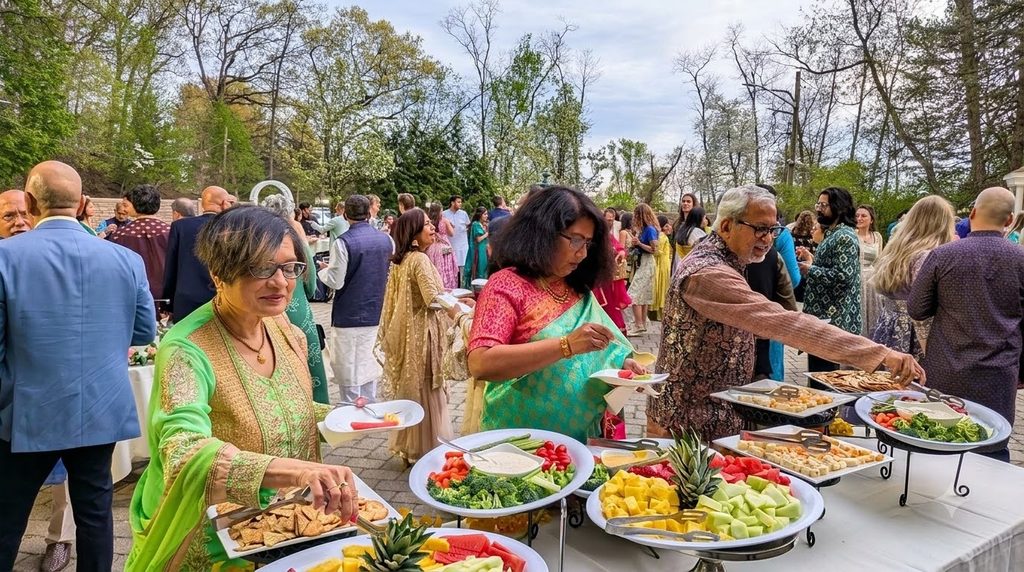
When planning a wedding with more than 200 guests, choosing the right dinner style is about much more than selecting a menu. The service format affects the entire reception experience, including guest movement, timeline, speeches, dancing, staffing, and overall atmosphere.
A dinner service that works perfectly for a small wedding may create delays and congestion when scaled to 200 or more guests.
The three most common options are:
- Plated dinner
- Buffet service
- Food stations
Each format creates a different guest experience.
A plated dinner provides structure and elegance. A buffet offers flexibility and variety. Food stations create a more interactive dining experience.
For many large weddings, a hybrid approach that combines elements of multiple formats can provide the best balance between organization and guest choice.
At Martinsville Gardens, couples should consider dinner service as part of the complete event design because tables, dance floors, bars, entertainment, décor, and guest movement all compete for the same space.
Plated Dinner vs Buffet vs Food Stations
| Factor | Plated Dinner | Buffet | Food Stations |
| Atmosphere | Formal and elegant | Relaxed and familiar | Interactive and social |
| Guest movement | Minimal | Guests move to serving areas | Distributed movement |
| Timeline control | Highest | Moderate | Flexible |
| Menu variety | Limited | High | Highest |
| Staffing needs | More servers | Buffet attendants | Multiple station attendants |
| Best for | Formal receptions | Casual or traditional weddings | Multicultural and interactive weddings |
There is no single perfect option.
The right choice depends on:
- Guest count
- Venue layout
- Catering team
- Reception timeline
- Guest preferences
- Budget
- Accessibility needs
Why Dinner Planning Becomes More Important With 200+ Guests
Large weddings require more than good food. They require efficient movement.
A dinner service must answer important questions:
- How quickly can guests receive their meals?
- How will lines be managed?
- Where will guests move after dinner begins?
- How will older guests or guests needing assistance be supported?
- How will dinner fit around speeches, dances, and entertainment?
The most important question is:
How will every guest receive a quality meal within the planned timeline without creating unnecessary waiting?
A beautiful menu can still create a poor guest experience if the service plan does not match the guest count.
Option 1: Plated Dinner Service
A plated dinner is the most traditional formal wedding meal format.
Guests remain seated while servers deliver each course directly to the table.
This style creates a controlled and elegant experience.
When Plated Dinner Works Best
A plated dinner is ideal when couples want:
- A formal atmosphere
- Organized reception timing
- Minimal guest movement
- Consistent presentation
- Controlled portions
- A traditional dining experience
Because guests remain seated, planners have more control over the timeline.
Speeches, first dances, and entertainment can be scheduled around meal service more easily.
Advantages of Plated Dinner
Better Guest Comfort
Guests do not need to stand in lines or carry plates through a crowded room.
This can be especially beneficial for:
- Older guests
- Guests with mobility limitations
- Families with children
Strong Timeline Control
A coordinated service team can help keep dinner moving according to schedule.
This allows couples to better plan:
- Toasts
- Entertainment
- Dancing
- Formal announcements
Elegant Presentation
Plated meals often create a more refined dining experience because every guest receives a professionally presented plate.
Challenges of Plated Dinner
Plated service requires strong coordination.
Important factors include:
- Accurate guest meal selections
- Proper seating charts
- Dietary tracking
- Enough service staff
- Clear table identification
Common problems include:
- Incorrect meal delivery
- Delays between first and final tables
- Last-minute guest changes
Before choosing plated service, ask:
- How long will complete meal service take?
- How many servers are included?
- How are dietary meals identified?
- How are guest changes handled?
Option 2: Buffet Wedding Dinner
A buffet allows guests to select their own meals from a displayed menu.
This format is popular because it provides flexibility and variety.
When Buffet Works Best
A buffet works well for couples who want:
- Multiple food choices
- A relaxed atmosphere
- Guests controlling portions
- Traditional family-style dining
Buffets can be especially useful when guests have different preferences.
Advantages of Buffet Service
More Menu Variety
Buffets allow couples to include:
- Multiple entrées
- Different side dishes
- Cultural specialties
- Vegetarian options
Guests can choose what they enjoy.
Flexible Guest Experience
Guests who prefer lighter meals or larger portions have more control.
This creates a relaxed dining environment.
Challenges of Buffet Service for Large Weddings
The biggest challenge is guest flow.
A single buffet line can create long waits for 200+ guests.
A successful buffet requires:
- Multiple serving points
- Organized table release
- Clear signage
- Food replenishment planning
- Assistance for guests who need help
Avoid placing buffet areas near:
- Entrances
- Bars
- Dance floors
- Entertainment areas
The goal is to prevent congestion.
Option 3: Food Stations
Food stations divide dinner into multiple service areas.
Examples include:
- Pasta stations
- Carving stations
- Dessert stations
- Cultural cuisine stations
- Chef-attended stations
This format creates an interactive dining experience.
When Food Stations Work Best
Food stations are ideal for couples who want:
- Menu variety
- Social interaction
- Multiple cuisines
- A modern reception style
They are especially useful for multicultural weddings where different cuisines are an important part of the celebration.
Advantages of Food Stations
Guests Explore Different Foods
Instead of receiving one fixed meal, guests can experience multiple options.
More Social Interaction
Stations encourage movement and conversation.
Guests naturally interact while exploring different areas.
Strong Visual Experience
Professionally designed stations can become part of the wedding décor.
Challenges of Food Stations
Food stations require careful planning.
Potential issues include:
- Uneven guest distribution
- Long lines at popular stations
- Additional staffing requirements
- More complex setup
To improve flow:
- Duplicate popular stations
- Spread stations throughout the venue
- Use clear signs
- Keep pathways open
A station format may feel casual, but operationally it requires detailed planning.
Hybrid Dinner Service: The Best of Multiple Formats
Many large weddings benefit from combining service styles.
Examples include:
Plated + Stations
Guests receive a plated first course while enjoying interactive stations later.
Buffet + Chef Stations
A traditional buffet is combined with specialty food areas.
Plated Dinner + Dessert Stations
The main meal remains formal while dessert becomes interactive.
Hybrid formats work well because they combine:
- Structure
- Variety
- Guest choice
- Better movement
However, the sequence must remain clear.
Guests should understand:
- When dinner begins
- Which areas are optional
- Where they should go
Choosing the Right Format Based on Your Wedding Goal
For a Formal Wedding
Best choice:
Plated dinner
Why:
- Elegant atmosphere
- Controlled timeline
- Minimal movement
For Maximum Food Variety
Best choice:
Buffet or stations
Why:
- More choices
- Flexible portions
- Different cuisines
For Multicultural Weddings
Best choice:
Food stations or hybrid
Why:
- Allows different traditions and cuisines
- Creates an interactive experience
For Guests With Mobility Needs
Best choice:
Plated or assisted hybrid service
Why:
- Less walking
- Easier access
- Better comfort
Important Questions to Ask Your Wedding Venue
Before finalizing dinner service, ask:
Service Questions
- How many guests can this format comfortably support?
- How many staff members are included?
- How long will dinner service take?
Layout Questions
- Where will serving areas be placed?
- Will lines affect dancing or entertainment?
- Are pathways accessible?
Food Questions
- How are allergies handled?
- Are vegetarian and dietary options available?
- How are special meals delivered?
Budget Questions
- Are staffing costs included?
- Are rentals included?
- Are service charges and taxes included?
Protecting Guest Experience
A successful dinner service considers every guest.
Important considerations include:
Dietary Needs
Collect information about:
- Allergies
- Vegetarian meals
- Religious restrictions
- Special dietary requirements
Ensure the catering team knows how these meals will be identified and delivered.
Accessibility
Consider:
- Clear walking paths
- Seating access
- Assistance for elderly guests
- Easy access to food areas
Reception Timing
Avoid scheduling major moments while guests are still waiting for dinner.
Plan speeches and entertainment around the actual meal timeline.
Which Dinner Format Is Best for a 200+ Guest Wedding?
The answer depends on the experience you want to create.
Choose:
Plated Dinner If You Want:
- Formal elegance
- Better timeline control
- Minimal movement
Buffet If You Want:
- Variety
- Flexibility
- A relaxed atmosphere
Food Stations If You Want:
- Interaction
- Multiple cuisines
- A modern dining experience
Hybrid If You Want:
- The advantages of multiple formats combined
For large weddings, the best dinner service is the one that matches your venue, guest expectations, and overall reception plan.
Final Thoughts
Choosing between plated dinner, buffet, and food stations is not only a catering decision. It is a guest experience decision.
For weddings with 200 or more guests, the best format is the one that allows everyone to enjoy the celebration comfortably while maintaining a smooth timeline.
A successful dinner plan balances:
- Food quality
- Guest movement
- Service speed
- Budget
- Venue layout
- Overall wedding atmosphere
With proper planning and coordination, any format can create a memorable dining experience.