
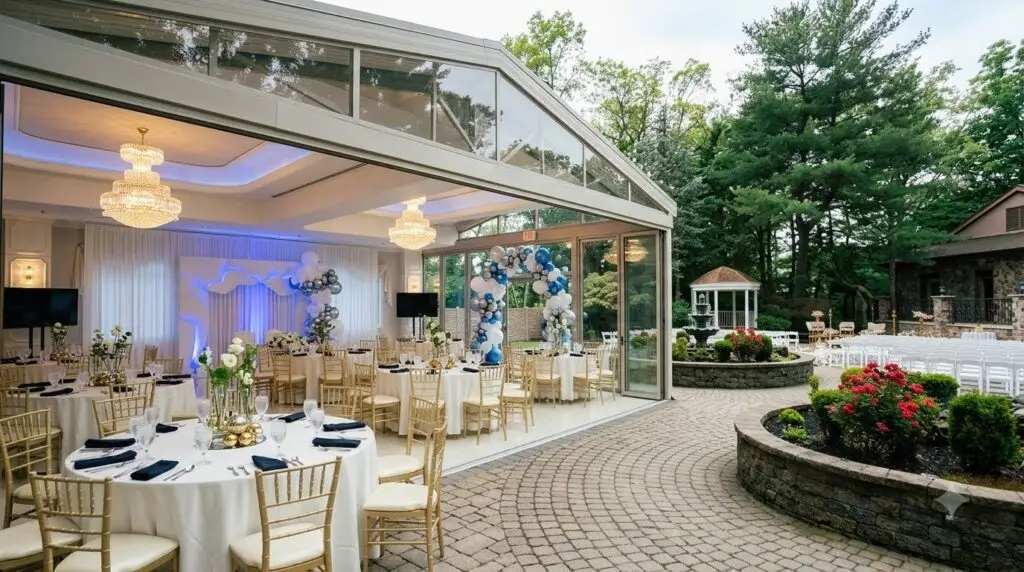
Choosing an outdoor wedding date in Bridgewater is not simply a choice between spring flowers and fall foliage. The month affects nearly every part of the celebration, including ceremony comfort, sunset portraits, cocktail-hour timing, clothing, floral durability, rain planning, landscape color, and how long guests can comfortably remain outside.
For most couples, May and September offer the best overall balance.
May brings fresh greenery, spring flowers, mild daytime temperatures, and increasingly long evenings. September offers warm afternoons, cooler nights, useful daylight, and a gradual transition toward autumn without the sharper temperature drop of late October.
June is the strongest choice for couples who want maximum daylight and late sunset portraits. October offers the best opportunity for fall color, but it requires an earlier ceremony, warmer guest attire, and a stronger indoor plan.
There is no weather-proof wedding month in Central Jersey. The best wedding month in Bridgewater, NJ is the one whose scenery, temperature, daylight, and weather risks match the celebration you actually want to host.
What Is the Best Month for an Outdoor Wedding in Bridgewater, NJ?
May is the best all-around spring wedding month because it combines fresh landscaping, moderate daytime temperatures, and sunset times that allow a late-afternoon ceremony.
September is the best all-around late-summer month because it usually offers warm days, more comfortable evenings than midsummer, and enough daylight for an outdoor ceremony and portraits.
Choose June for the latest sunsets and longest outdoor timeline. Choose October for the strongest chance of fall foliage and a distinctly autumn atmosphere.
Bridgewater Outdoor Wedding Months at a Glance
The climate figures below use 1991–2020 normals from the nearby Somerville weather station as a local planning reference. Climate normals describe long-term averages. They cannot predict the conditions on a specific wedding date.
| Month | Normal high / low | Normal precipitation | Main advantage | Main tradeoff |
| April | 63°F / 39°F | 3.59 in. | Flowering trees and early spring character | Cool evenings and changeable conditions |
| May | 73°F / 48°F | 3.54 in. | Spring blooms, greenery, and long daylight | Rain remains possible; evenings may cool quickly |
| June | 81°F / 58°F | 4.23 in. | Latest sunsets and full green landscapes | Increasing heat, humidity, and storm risk |
| July | 86°F / 63°F | 4.93 in. | Long evenings and peak summer atmosphere | Heat, humidity, and guest-comfort concerns |
| August | 84°F / 61°F | 5.18 in. | Mature summer landscape | High precipitation normal and warm conditions |
| September | 78°F / 54°F | 3.82 in. | Warm days with more comfortable evenings | Sunset moves earlier quickly |
| October | 66°F / 42°F | 3.67 in. | Fall foliage and crisp seasonal atmosphere | Shorter daylight and colder evenings |
| November | 55°F / 33°F | 3.41 in. | Late-fall style and indoor warmth | Frost, bare trees, and limited outdoor comfort |
These figures reveal an important point: no main wedding month is reliably dry. Even the months with the lowest precipitation normals still require a complete indoor alternative.
May: The Best Overall Month for a Spring Outdoor Wedding
May offers one of the most useful combinations of scenery, temperature, and daylight for an outdoor wedding in Bridgewater.
The nearby Somerville climate normal for May is approximately 73°F for the daytime high and 48°F for the nighttime low. The month begins with normal highs around 69°F and ends with highs approaching 77°F, so an early-May wedding may feel noticeably cooler than a Memorial Day weekend celebration.
Why May works so well
May can offer:
- Fresh green lawns and foliage
- Seasonal flowering trees and garden color
- Comfortable afternoon ceremony conditions
- Long daylight for photographs
- Cooler temperatures than June, July, or August
- Flexible spring color palettes and menus
The landscape usually looks established enough to feel lush without the heavier heat stress that can affect gardens later in summer.
How sunset affects a May timeline
Sunset in Bridgewater moves later throughout May. As a representative seasonal example, it is approximately 7:54 p.m. at the beginning of May and moves beyond 8:20 p.m. by the end of the month. Exact times should always be recalculated for the wedding date and year.
That daylight gives couples room for:
- A 4:30 or 5:00 p.m. ceremony
- Outdoor cocktail hour
- Family portraits after the ceremony
- Couple portraits closer to golden hour
- Landscape photographs before darkness
A late-May couple may have almost half an hour more evening light than a couple marrying on May 1.
May’s weather tradeoffs
May is not a guaranteed dry-weather month. Its normal precipitation is approximately 3.54 inches, and spring weather can shift between warm sunshine, cool rain, and breezy conditions.
Even when the afternoon is comfortable, evening temperatures may fall into the 50s. Guests in light formalwear may begin feeling cold once the sun disappears.
Best May wedding plan
May works best when the ceremony and cocktail hour can be held outside while the reception takes place in a temperature-controlled indoor space.
Plan for:
- A light-jacket or wrap note on the wedding website
- Indoor access for older guests
- A covered or ballroom cocktail-hour alternative
- Dry flooring and protected paths after rain
- A weather decision deadline
- An attractive indoor ceremony arrangement
Best for: Couples who want spring flowers, green scenery, long daylight, and moderate temperatures without committing to summer heat.
June: The Best Month for Long Daylight and Sunset Portraits
June offers the longest daylight window of the outdoor wedding season.
The normal June high near Bridgewater is approximately 81°F, with a normal low around 58°F. Normal monthly precipitation rises to approximately 4.23 inches.
Why couples choose June
June can provide:
- Full, mature greenery
- Long outdoor cocktail hours
- Flexible ceremony start times
- Late golden-hour portraits
- Warmer evenings than May
- More time for photographs without delaying the reception
In 2026, Bridgewater sunsets occur around 8:23 p.m. at the beginning of June and approximately 8:32 to 8:33 p.m. around the summer solstice. Couples should verify the exact time for their wedding year.
A late sunset allows a couple to begin dinner before stepping outside briefly for portraits in softer evening light.
June’s weather tradeoffs
June introduces conditions that are less common in May:
- Higher humidity
- Hotter afternoon sun
- Greater need for shade and hydration
- Warm-season thunderstorms
- Stronger effects on flowers, cakes, makeup, and formal clothing
The average high does not represent the maximum possible temperature. A June wedding can still fall on a much hotter day.
Best June wedding plan
Do not place guests in direct sun significantly earlier than the ceremony. Open seating too early and a 20-minute ceremony can quietly become an hour-long outdoor exposure.
Provide:
- Water before guests are seated
- Shade in the waiting area
- An indoor cooling option
- Protected power and sound equipment
- A clear lightning and thunderstorm procedure
- Heat-conscious floral and dessert choices
- A late-afternoon or early-evening ceremony when possible
Best for: Couples who want the longest possible outdoor timeline and prioritize sunset photography over cooler daytime temperatures.
September: The Best Overall Month for Warmth Without Peak-Summer Heat
September combines much of summer’s landscape with a gradual shift toward cooler evenings.
The monthly normal high is approximately 78°F and the low is around 54°F. Conditions change significantly across the month: normal highs start near 82°F and fall to approximately 72°F by September 30.
Why September is a strong wedding month
September can provide:
- Warm ceremony weather
- More comfortable evenings than July and August
- Green landscaping early in the month
- Subtle seasonal transition later in the month
- Flexible summer or early-fall décor
- Lower normal precipitation than June, July, or August
It is especially useful for couples who want outdoor warmth but do not want to build the entire guest experience around cooling and shade.
September’s biggest tradeoff: daylight changes quickly
Sunset shifts earlier by almost 50 minutes during September.
In 2026, sunset is approximately:
- 7:30 p.m. on September 1
- 7:07 p.m. on September 15
- 6:42 p.m. on September 30
That difference can completely change the photography and ceremony timeline.
A schedule designed for the first weekend of September may leave a late-September couple taking portraits in darkness.
Best September wedding plan
For early September, a ceremony around 5:00 p.m. may still leave a useful post-ceremony photography window.
For late September, couples should consider:
- A 4:00 or 4:30 p.m. ceremony
- A first look
- Wedding-party and family portraits before the ceremony
- Earlier outdoor cocktail-hour transitions
- Pathway lighting before dinner
- Light wraps for evening terrace use
Best for: Couples who want warm days, cooler evenings, and a landscape that can support either late-summer or early-fall styling.
October: The Best Month for Fall Color
October offers the strongest opportunity for an unmistakably autumn wedding.
The normal monthly high is approximately 66°F and the low is around 42°F. However, October is a rapidly changing month. Normal highs fall from roughly 72°F at the beginning to approximately 61°F near the end, while normal lows decline from about 48°F to 37°F.
An early-October wedding and a Halloween-weekend wedding should not use the same comfort or timeline plan.
When does Bridgewater get the best fall foliage?
Mid-to-late October generally offers the strongest opportunity for color in Central Jersey, but peak foliage cannot be guaranteed.
Leaf timing and intensity vary with:
- Daylight
- Temperature
- Rainfall
- Drought stress
- Wind
- Tree species
- Summer growing conditions
October is a transitional month in New Jersey, with daylight shortening and weather shifting from warm-season to cool-season patterns.
A strong storm may remove leaves shortly after peak color, while drought or prolonged warmth can affect the timing and intensity.
October’s sunset tradeoff
Sunset is already around 6:40 p.m. on October 1. It moves to approximately 6:18 p.m. by October 15 and shortly after 6:00 p.m. late in the month.
Couples who want foliage portraits should not schedule the ceremony to end at sunset.
Best October wedding plan
For a mid-to-late October wedding:
- Complete major portraits before the ceremony
- Use a first look
- Begin the ceremony earlier in the afternoon
- Keep the outdoor ceremony concise
- Move cocktail hour indoors if temperatures drop
- Provide a coat-check area
- Illuminate steps and outdoor paths
- Avoid promising an entirely outdoor evening
October works particularly well when the outdoor landscape is used for the ceremony and portraits, while the grand ballroom provides warmth for dinner and dancing.
Best for: Couples who value fall atmosphere and foliage more than late sunset, warm evenings, or an extended outdoor reception.
Late April: Best for Early Spring Character, With Greater Weather Variability
Late April can offer flowering trees, early leaves, and a bright spring atmosphere.
The normal April high is approximately 63°F and the low is around 39°F. Conditions improve steadily during the month: normal highs rise from around 57°F on April 1 to nearly 69°F by April 30.
Why late April can work
Late April may appeal to couples who want:
- Early spring flowers
- Cooler ceremony weather
- Soft seasonal color
- More vendor or date flexibility
- An outdoor ceremony followed by an indoor reception
The main tradeoff
April weather can change dramatically within one day. A sunny afternoon may be followed by a cold or windy evening.
Bloom timing also varies. A venue photograph from the same calendar date in a previous year does not guarantee identical flowers. Warm winters, cold snaps, heavy rain, and the plants located on the property all influence the display.
What to ask the venue
Ask:
- Which trees and plants typically flower in April?
- Which parts of the grounds retain visual interest without blooms?
- Can the venue show photographs from the same two-week period in previous years?
- How are wet lawns and paths handled?
- At what temperature would the ceremony move indoors?
- Is the indoor backup fully designed before the wedding day?
Best for: Couples who value early spring character and are comfortable treating the outdoor ceremony as weather-dependent.
July and August: Best for Summer Energy, but Harder on Guest Comfort
July and August deliver full summer color, long evenings, and lush landscapes. They also require the most deliberate comfort planning.
July’s normal high is approximately 86°F and its normal low is around 63°F. August averages approximately 84°F and 61°F. Normal precipitation is about 4.93 inches in July and 5.18 inches in August, the highest monthly total among the main wedding months in this comparison.
Summer wedding advantages
- Full green landscapes
- Long outdoor-photo windows
- Warm evenings
- Strong summer color palettes
- Later ceremony possibilities
- Outdoor cocktail-hour potential
Summer wedding risks
- Heat and humidity
- Direct afternoon sun
- Thunderstorms
- Wilted florals
- Softened desserts
- Guests arriving dehydrated
- Makeup and formalwear discomfort
- Hot surfaces and unshaded seating
Best July or August wedding plan
Schedule the ceremony later when the location receives less direct sun.
Provide:
- Water before and during guest arrival
- Shade or indoor waiting
- A cooled ballroom available throughout
- Heat-resistant floral choices
- Protected desserts and cakes
- A rapid thunderstorm transition
- Safe shelter for musicians and electrical equipment
- A transportation plan that does not leave guests waiting outdoors
Best for: Couples who love a full summer aesthetic and are willing to spend more planning energy on heat, shade, hydration, and storms.
November: Best Treated as an Indoor Wedding With Outdoor Moments
November can create a romantic late-fall atmosphere, but it should not be chosen with the expectation of a reliably comfortable outdoor celebration.
The normal high is approximately 55°F, while the normal low is around 33°F. Both figures continue declining throughout the month.
By November:
- Peak foliage may have passed
- Trees may be partly bare
- Sunset arrives early
- Frost becomes more likely
- Wind can make moderate temperatures feel colder
- Outdoor ceremonies may be uncomfortable for children and older guests
A short outdoor ceremony may still work on a suitable day, but the ballroom should be treated as the primary event environment.
Best for: Couples who want a warm indoor reception with optional outdoor portraits rather than a predominantly outdoor event.
Which Wedding Month Best Matches Your Priority?
| Wedding priority | Strongest month or window | Why |
| Best overall spring balance | May | Mild temperatures, spring landscape, and late sunset |
| Best overall late-summer balance | September | Warm afternoons and cooler evenings |
| Longest daylight | June | Sunset around 8:30 p.m. near the solstice |
| Spring blooms | Late April through May | Strongest seasonal potential, though timing varies |
| Fall foliage | Mid-to-late October | Best opportunity for autumn color |
| Lower heat exposure | May or October | Cooler normal daytime temperatures |
| Warm evening cocktail hour | June or early September | Milder nighttime conditions |
| Fully outdoor reception potential | June or early September | Useful balance of daylight and evening warmth |
| Outdoor ceremony with indoor reception | May, June, September, or early October | Strong scenery with practical ballroom flexibility |
How Sunset Time Should Shape the Wedding Timeline
Sunset affects more than photographs. It determines:
- Ceremony start time
- Whether a first look is needed
- When family photographs happen
- How long cocktail hour can remain outside
- When pathway lighting becomes necessary
- When temperatures begin dropping
- Whether the landscape remains visible during guest arrival
Build the schedule backward from sunset
Start with the exact sunset time for the wedding date, then determine:
- How long the photographer needs for couple portraits
- Whether family and wedding-party photographs happen before the ceremony
- How long the ceremony will last
- How much time guests need to move to cocktail hour
- Whether sunset portraits interrupt dinner
- When outdoor lighting must be turned on
Do not plan for the ceremony to end exactly at sunset unless all priority portraits will be completed earlier.
Practical seasonal examples
Late May: A 5:00 p.m. ceremony can leave several hours of daylight.
June: A later ceremony can still support outdoor cocktail hour and sunset portraits.
Early September: A 5:00 p.m. ceremony may work, depending on the date.
Late September: A first look or earlier ceremony becomes more valuable.
October: Most important photographs should be completed before or immediately after an earlier ceremony.
Sunset times change slightly each year. Couples should calculate the exact date rather than relying on a generic monthly estimate.
Blooms and Fall Color Should Be Treated as Seasonal Potential, Not a Guarantee
Couples often choose a date after seeing a photograph of a venue covered in flowers or autumn leaves.
That image shows what was possible on one date under one year’s conditions. It does not guarantee the same landscape for a future wedding.
For spring blooms, ask:
- What plant species are present?
- What normally flowers during the selected month?
- Does the venue maintain annual flowers as well as flowering trees?
- Which areas remain attractive before or after peak bloom?
- Can the venue show images from several years?
For fall foliage, ask:
- Which trees provide the strongest color?
- Does the landscape change earlier or later than surrounding areas?
- Are there evergreen or architectural backgrounds if leaves fall early?
- Which photo locations still work after a storm?
- Are leaf cleanup and wet-path management handled before the ceremony?
Choose a venue whose architecture and grounds remain appealing even when the seasonal display arrives early, late, or briefly.
Rain Is Not the Only Weather Risk
A proper outdoor plan should account for more than precipitation.
Possible reasons to move or modify an outdoor ceremony include:
- Lightning
- High wind
- Excessive heat
- Low temperatures
- Muddy or slippery ground
- Poor air quality
- Unsafe paths
- Wet electrical equipment
- Conditions that affect guest accessibility
The indoor alternative should be considered part of the original design, not a last-minute downgrade.
What a Complete Outdoor Wedding Backup Plan Includes
A real backup plan answers every operational question before the wedding day.
Confirm:
- The indoor ceremony location
- Whether it accommodates the complete guest list
- How chairs and décor will be moved
- Who makes the weather decision
- The decision deadline
- Whether the couple may choose the indoor option early
- Where guests wait during the transition
- How musicians and sound equipment are protected
- What happens to floral installations
- Whether cocktail hour changes location
- How photographers use indoor spaces
- How wet paths and accessibility are handled
- Which vendors must approve the change
The backup ceremony should use intentional lighting, décor, and seating. Guests should feel that they entered Plan B, not Warehouse C.
When Should the Final Outdoor Decision Be Made?
Do not use a forecast viewed several weeks before the wedding as the final decision.
Use staged checkpoints:
One month before
Finalize both indoor and outdoor layouts. Confirm vendor responsibilities and weather-related contract terms.
One week before
Review the broad temperature, rain, and storm pattern. Confirm that all vendors understand both plans.
Three days before
Evaluate precipitation timing, wind, ground conditions, temperature, and outdoor setup requirements.
Wedding day
Follow the venue’s established decision deadline. Avoid repeated last-minute changes that leave chairs, flowers, guests, and vendors wandering through a logistical fog bank.
How the Month Affects Guest Comfort
The couple may spend only 20 minutes at the outdoor ceremony site. Guests may be outside much longer while arriving, waiting, sitting, and moving to cocktail hour.
Spring comfort priorities
- Dry walking surfaces
- Wraps or jackets
- Wind protection
- Warm indoor access
- Covered waiting space
Summer comfort priorities
- Shade
- Water
- Cooling
- Late ceremony timing
- Heat-conscious menus and florals
Fall comfort priorities
- Earlier ceremony
- Coat storage
- Outdoor lighting
- Warm beverages
- Shorter outdoor exposure
Consider grandparents, young children, pregnant guests, guests with mobility needs, and anyone sensitive to heat, cold, sound, or uneven ground.
How Martinsville Gardens Supports an Indoor-Outdoor Wedding Plan
Martinsville Gardens is located at 1801 Washington Valley Road in Martinsville, within Bridgewater Township. The venue sits on nearly nine acres in the Watchung Mountains overlooking Washington Valley and offers flexible indoor and outdoor event spaces. Its official wedding information describes an outdoor terrace ceremony setting, landscaped surroundings, flexible setups, and a grand ballroom for receptions.
That indoor-outdoor combination matters because a strong outdoor wedding venue is not defined only by how the ceremony looks in perfect weather. It is also defined by how smoothly the event continues when the weather changes.
Martinsville Gardens publicly highlights:
- An outdoor terrace
- A grand ballroom
- Landscaped grounds
- Watchung Mountain and Washington Valley surroundings
- Flexible wedding setups
- Event coordinators and planning support
- Indoor and outdoor event spaces
The exact ceremony location, ballroom arrangement, terrace availability, guest capacity, package inclusions, heating or cooling options, and weather-transition process should be confirmed for the selected date.
Questions to Ask During an Outdoor Wedding Venue Tour
Bring the preferred month, approximate ceremony time, guest count, and photography priorities.
Ask:
- Which outdoor ceremony area is available for our date?
- Which plants or landscape features usually look strongest that month?
- Can we see photographs from the same period in previous years?
- Where does the ceremony move if conditions change?
- Can the indoor backup accommodate the full guest count?
- Is the backup space designed before the wedding day?
- Who makes the final weather decision?
- What is the decision deadline?
- Can cocktail hour move between the terrace and ballroom?
- How are wet paths and lawns handled?
- Which routes are accessible for guests with mobility needs?
- What outdoor lighting is available after sunset?
- Are heaters, fans, or cooling stations available or permitted?
- How are musicians and sound equipment protected?
- What happens to ceremony flowers if the location changes?
- Which outdoor spaces are included in the package?
- Are there restrictions related to wind, lightning, heat, or temperature?
- Where can photographs be taken during rain?
- How long can guests remain on the terrace?
- Can the timeline be adjusted for the exact sunset time?
Frequently Asked Questions
What is the best wedding month in Bridgewater, NJ?
May and September offer the strongest overall balance. May is ideal for spring greenery, flowers, and long daylight. September offers warm afternoons, cooler evenings, and greater comfort than peak summer.
Is May or October better for an outdoor wedding?
Choose May for longer evenings, spring flowers, and milder nighttime temperatures. Choose October for autumn foliage and cooler daytime conditions. October requires an earlier ceremony and a stronger cold-weather plan.
When is fall foliage usually best in Bridgewater?
Mid-to-late October generally offers the best opportunity for fall color, but peak timing and intensity vary each year. Weather, drought, wind, and tree species can shift or shorten the display.
Is June too hot for an outdoor wedding in New Jersey?
Not necessarily. The normal June high near Bridgewater is approximately 81°F, but hotter and more humid days are possible. A later ceremony, shade, water, indoor cooling, and a storm plan make June more comfortable.
Which month has the latest sunset?
June has the latest sunsets. Around the summer solstice, Bridgewater sunset is close to 8:30 p.m., creating the largest window for outdoor ceremonies, cocktail hour, and portraits.
Can an October cocktail hour be held outside?
Yes, particularly in early October, but the exact temperature, wind, and sunset time should be reviewed. An indoor alternative should remain available, and guests should not be required to stay outside after conditions become uncomfortable.
Can a wedding venue guarantee flowers or fall color?
No. Bloom and foliage timing depend on weather, plant varieties, temperature, rain, drought, and seasonal conditions. Couples should ask for historical photographs while choosing a venue that remains attractive outside peak bloom.
What happens if it rains at Martinsville Gardens?
Martinsville Gardens offers indoor and outdoor wedding spaces, including an outdoor terrace and grand ballroom. Couples should confirm the specific indoor ceremony arrangement, decision deadline, transition process, and package details with the venue team.
Choose the Month by Its Tradeoffs, Not Its Reputation
There is no universally perfect outdoor wedding month in Bridgewater.
May delivers the strongest spring balance. June provides the longest daylight. September combines warmth with more comfortable evenings. October creates the best opportunity for fall color but demands earlier timing and stronger cold-weather preparation.
Before reserving a date, decide which matters most:
- Spring flowers or autumn foliage
- A late sunset or cooler temperatures
- A long outdoor cocktail hour or a short garden ceremony
- Warm evening air or a crisp fall atmosphere
- Maximum time outside or easier guest comfort
Martinsville Gardens combines landscaped outdoor settings with an indoor grand ballroom, allowing couples to build a celebration around the season without making the entire wedding dependent on perfect weather.
The best wedding month in Bridgewater, NJ is not the month with zero weather risk. It is the month whose light, scenery, temperature, and backup requirements align with the experience you want your guests to remember.