
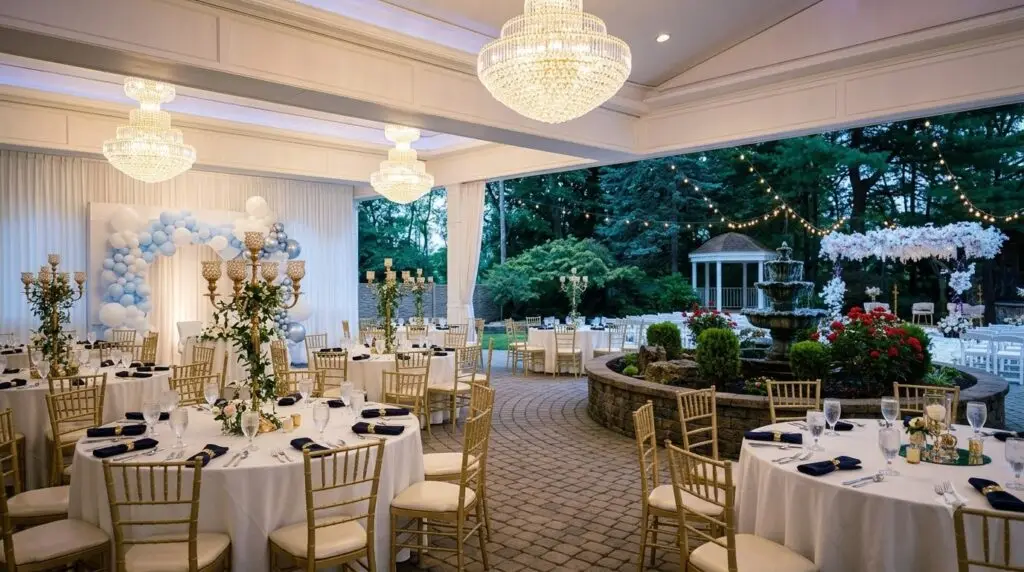
A Sweet 16 often brings two very different guest experiences into the same room. Teenagers want music, movement, photos, mocktails, and space to socialize without feeling watched. Adults want comfortable seating, good food, manageable sound, and a clear view of the milestone moments they came to celebrate.
The solution is not to create two disconnected parties. It is to design one celebration with three coordinated parts:
- A high-energy teen zone
- A comfortable adult zone
- A shared focal area for the entrance, candle ceremony, speeches, cake, family dances, and group photos
When comparing a Sweet 16 venue in Bridgewater, NJ, look beyond décor. The guest ratio, floor plan, sightlines, speaker direction, food-service pattern, supervision plan, and timeline determine whether both generations enjoy the event.
What Is the Best Teen-and-Adult Sweet 16 Setup?
Place the DJ, dance floor, photo experience, mocktail station, and flexible lounge seating in the teen zone. Position adult dining tables outside the direct speaker path but within clear view of the program area. Use one central shared zone for the entrance, candle ceremony, speeches, cake, family photos, and final celebration.
Lighting, furniture placement, and sound direction can create distinct experiences without isolating either group or requiring two completely separate parties.
What “Separate Experiences” Should Actually Mean
The goal is not physical separation for its own sake. Each group should receive the atmosphere it needs while remaining connected to the guest of honor.
| Teen experience | Adult experience | Shared experience |
| Dance floor and DJ | Comfortable dining tables | Grand entrance |
| Photo booth or content area | Conversation-friendly sound level | Candle ceremony or family tradition |
| Mocktails and easy-access snacks | Full meal, coffee, and dessert | Speeches and birthday video |
| Flexible lounge or high-top seating | Clear views of the program | Cake cutting and group photos |
| Teen-led music and entertainment | Convenient access to exits and restrooms | Family dance or final song |
If one group must repeatedly leave its area to see what is happening, the layout is not properly coordinated.
Decide Who Controls Which Parts of the Event
Planning becomes easier when the teen and parents know which decisions belong to whom.
The birthday teen should lead decisions involving:
- Theme and color direction
- Playlist and entertainment style
- Photo-booth concept
- Grand entrance
- Teen lounge experience
- Preferred traditions
Parents should control:
- Budget and contracts
- Transportation
- Supervision
- Venue and vendor approvals
- Safety rules
- Adult beverage decisions
The family should decide together:
- Guest list
- Menu
- Event length
- Candle ceremony or other traditions
- Dress code
- Overall level of formality
This gives the teenager genuine ownership without leaving parents responsible for plans they did not approve.
Start With the Teen-to-Adult Guest Ratio
Estimate the guest split before approving the floor plan, furniture, rentals, or entertainment package.
| Expected guest mix | Recommended emphasis |
| Approximately 70% teens | Large dance and social zone with compact adult dining |
| Approximately 50% teens | Balanced seating with a central shared program area |
| Approximately 40% teens | Dining-led layout with a defined teen entertainment zone |
| Smaller celebration | One room divided through lighting, furniture, and sound direction |
The ratio affects:
- Number of dining tables
- Dance-floor size
- Lounge seating
- Food-station placement
- Adult conversation space
- Supervision coverage
- Beverage service
- Number of guests attending formal moments
Track teen guests, adults, and younger children separately during RSVP planning. Also record dietary requirements and whether teen guests will be dropped off or attend with family.
Do not divide the room equally simply because it looks symmetrical on paper. The layout should follow the guest list and event style.
Choose the Right Layout Model
Layout 1: Teen Dance Core With Adult Perimeter Seating
Place the DJ and dance floor at the event’s energy center. Keep the teen lounge, photo experience, and mocktail station nearby. Arrange adult tables around the quieter perimeter, facing the shared program area.
This model works well when:
- Teenagers form most of the guest list
- Dancing is the main activity
- Adults want to remain in the same ballroom
- The room allows speakers to face away from adult tables
Avoid placing adults directly behind the speakers or along the service route between the kitchen, food stations, and guest tables.
Layout 2: One Ballroom With Two Atmospheres
Keep everyone in one ballroom but use lighting, furniture, and sound to create two different moods.
The teen side can use:
- Active lighting
- Lounge or high-top seating
- Photo booth
- DJ-led entertainment
- Mocktail service
The adult side can use:
- Warmer lighting
- Traditional dining tables
- Lower sound exposure
- Coffee and dessert service
- Clear views of the program
A central cake or ceremony area connects both zones.
This setup keeps the event visually unified and may reduce the need for duplicate furniture, sound systems, or décor.
Layout 3: Ballroom Plus an Approved Quieter Area
Use the ballroom for entertainment and shared milestone moments while an approved adjoining or outdoor area gives adults additional conversation space.
Martinsville Gardens publicly describes a grand ballroom, enhanced terrace, gazebo, landscaped grounds, and flexible indoor and outdoor event spaces. The venue sits on nearly nine acres in Bridgewater Township. Whether the terrace or another space can be incorporated into a specific Sweet 16 depends on the date, weather plan, package, guest count, and venue approval.
This model needs a reliable return-to-program plan. Adults should receive clear notice before the entrance, speeches, candle ceremony, cake, or family dance begins.
Layout 4: Dinner First, Teen Party Second
Begin with both age groups seated for the entrance, meal, speeches, and family traditions. After the formal program, selected tables can be removed or repurposed to create a larger dance and social area for teens.
Adults can then move toward quieter dining or lounge seating while remaining in the room.
This approach works when the family wants a formal opening but the teenager wants the second half of the event to feel more like a private party.
Confirm room-reset timing, staffing, table removal, and storage with the venue before choosing this model.
Build the Floor Plan Around Sightlines and Movement
A floor plan can look attractive on paper and still fail once guests, servers, and vendors begin moving.
Protect clear routes between:
- Entrance and guest check-in
- Teen and adult seating
- Dance floor and DJ
- Food stations and dining tables
- Photo booth or backdrop
- Restrooms and exits
- Cake, gift, and card tables
- Approved terrace or outdoor areas
The shared program area should be visible from the adult tables and easy for teenagers to gather around. It should not sit inside a service lane or beside a main speaker.
During the venue tour, test the room from the guest’s perspective:
- Sit at the proposed adult tables and look toward the ceremony area.
- Stand near the teen lounge and examine the path to the dance floor.
- Check whether the photo line would block food or restroom access.
- Trace the route servers will use while carrying plates.
- Confirm that exits remain clear after décor and equipment are installed.
Maximum venue capacity should not be treated as the automatic guest target. The practical capacity for a Sweet 16 depends on the dance floor, DJ equipment, food service, photo setup, lounge furniture, and the amount of space required between zones.
Design the Teen Zone Around Movement
Teen guests usually rotate between dancing, photos, food, and conversations. Their area should support movement rather than fill the room with formal tables they will barely use.
A functional teen zone may include:
- Open dance floor
- DJ and MC
- Photo booth, 360 booth, or styled backdrop
- Mocktail, soda, and water station
- Limited lounge or high-top seating
- Charging area
- Dessert or late-night snack access
- Secure gift and card location
Place the photo experience close enough to feel part of the party but far enough from the dance-floor entrance that waiting guests do not form a barrier.
Before the event, agree with the DJ on:
- Clean song versions
- Guest-request policy
- Do-not-play list
- Microphone use
- Dinner sound level
- Entrance music
- Candle-ceremony or family-dance cues
- Final song
Avoid over-programming the teen experience. Too many games, speeches, performances, or mandatory activities can interrupt the social rhythm that makes the party enjoyable.
Give Adults Comfort Without Disconnecting Them
Adults do not need a silent room. They need a place where conversation is possible without losing their connection to the celebration.
Adult seating should provide:
- Distance from direct speaker output
- Clear views of formal moments
- Comfortable table spacing
- Easy restroom and exit access
- Coffee, dessert, and water service
- Simple movement for older guests
- A route that does not cross the dance floor
Do not treat the adult section as overflow seating. Use the same theme and design language as the teen zone, but interpret it through softer lighting and a calmer service pattern.
Parents and close relatives should be able to reach the shared program area quickly. Their tables should not sit so close to the dance floor that they resemble supervision posts.
If adult beverages are offered, ask how the service will be controlled and separated from teen drinks. Never assume that a bar, bartender, mocktail station, or specialty beverage service is included in the standard package.
Create a Shared Program With Clear Transitions
The shared program gives the event its emotional structure. Choose traditions because they matter to the teen and family, not because every Sweet 16 is expected to include them.
Possible shared moments include:
- Grand entrance
- Welcome or blessing
- Candle-lighting ceremony
- Parent or family dance
- Short speeches
- Birthday video
- Cake cutting
- Group photograph
- Final song or send-off
Schedule these moments before finalizing dinner and dance sets.
The DJ or emcee should:
- Give guests advance notice.
- Lower or pause the music.
- Direct both zones toward the shared area.
- Confirm that photographers are ready.
- Restart the next activity without a long delay.
Avoid scheduling important moments while adults are being served, teenagers are lining up for food, or the photo booth is at peak demand.
Keep speeches focused. The program should honor the milestone without turning the event into a long ceremony that drains the dance-floor energy.
Plan Food Service Around How Each Group Uses the Event
Teen and adult guests do not necessarily need two completely different menus. They often need different service rhythms.
| Teen-friendly service | Adult-friendly service | Shared service |
| Quick-access stations | Comfortable dining period | Main meal |
| Mocktails, soda, and water | Coffee and dessert | Cake |
| Familiar, easy-to-eat choices | Broader entrée and side selection | Signature dessert |
| Late-night snack | Adult beverage service, if selected | Nonalcoholic toast |
Place food in a neutral area that both zones can reach without crossing the dance floor.
Avoid positioning the busiest station:
- Beside adult tables
- In front of the photo backdrop
- Inside the main entrance
- Along the route to restrooms
- Directly beside the DJ
Before finalizing the menu, confirm:
- Plated, buffet, family-style, or station service
- Vegetarian, vegan, and dietary options
- Food-allergy procedures
- Cultural or religious menu needs
- Teen beverage choices
- Adult beverage controls
- Cake-cutting service
- Dessert timing
- Late-night snack availability
- Final menu and guest-count deadlines
Martinsville Gardens states that its celebration spaces can be customized and that its team supports décor and logistics. Exact catering formats, beverage services, and package inclusions should be verified for the selected event.
Use Sound and Lighting as Invisible Dividers
Furniture creates physical boundaries. Sound and lighting make each area feel different.
Ask the DJ or production team to plan three sound modes:
- Lower background music during arrival and dining
- Clear microphone audio during speeches and traditions
- Higher dance volume directed toward the teen zone
The adult area does not need silence. The objective is to prevent the dance mix from reaching every table at the same intensity.
Lighting can follow the event timeline:
- Active effects during teen dance sets
- Warm, steady lighting near adult dining
- Clean, balanced lighting for speeches and cake
- Safe lighting along exits, steps, and outdoor routes
Confirm venue rules before booking cold sparks, fog, confetti, specialty lighting, or other effects. Approval may involve safety restrictions, cleanup requirements, or vendor limitations.
Plan Photography and Social Content
The birthday teen may care as much about social content as the formal photo album. Plan both rather than allowing them to compete.
Create a shot list that includes:
- Grand entrance
- Teen group photos
- Immediate family
- Candle ceremony or family tradition
- Adult table candids
- Cake cutting
- Dance-floor energy
- Décor and food details
- One full-room image showing both experiences
Place the photo booth or content backdrop where:
- Lighting can be controlled
- Guests have room to queue
- The line does not block service
- The backdrop does not compete with the cake display
- Equipment will not narrow an exit route
Schedule family portraits instead of trying to gather relatives throughout the evening.
Discuss photo-sharing expectations before the event, particularly when vendors intend to use images of teen guests for public marketing.
Build Supervision Into the Event
A Sweet 16 needs adult oversight, but supervision should be assigned, calm, and mostly peripheral.
Give named adults responsibility for:
- Guest arrival
- General supervision
- Gift and card security
- Outdoor or transition-area checks
- Communication with venue staff
- Transportation changes
- Emergency contacts
- Final pickup
There is no universal number of chaperones for every Sweet 16. The appropriate level depends on:
- Guest count
- Age mix
- Venue rules
- Number of active zones
- Outdoor access
- Transportation plan
- Whether younger children are attending
Position supervising adults near exits, transition points, or adult tables rather than in the middle of the dance floor.
Organize Arrival, Re-Entry, and Pickup
The guest experience begins at drop-off and ends after the final teen leaves safely.
Decide in advance:
- Where guests will check in
- Whether re-entry is permitted
- Who may leave without a parent
- Where rideshare and family pickup will occur
- Who handles late transportation changes
- Which adult remains until every teen has departed
- How gifts and cards will leave the venue securely
Include the end time, pickup location, dress code, and a parent contact number in the invitation or pre-event message.
A clear departure plan prevents the entrance from becoming a thicket of idling cars, missing coats, and conflicting pickup instructions.
Include Accessibility and a Quiet Reset Area
Mixed-age guest lists may include grandparents, guests with mobility needs, younger siblings, or teens who need a temporary break from strong sound and lighting.
During the venue tour, ask about:
- Step-free routes
- Accessible restrooms
- Seating near exits
- Outdoor-surface accessibility
- Lower-stimulation seating
- Safe lighting along paths
- Weather protection between spaces
A quiet reset area does not need to become another party zone. It simply gives guests somewhere to pause without leaving the celebration.
Budget for the Guest Experience First
Creating separate teen and adult experiences does not automatically require two rooms. Costs may increase with:
- Lounge furniture
- Specialty lighting
- Photo or video installations
- Multiple food or beverage stations
- Additional sound equipment
- Extra staffing
- Access to additional spaces
- Extended event time
- Room-reset labor
- Separate décor installations
Prioritize spending in this order:
- Functional floor plan
- Sound direction
- Comfortable seating
- Food access
- Supervision and transportation
- Photography
- Lighting and decorative upgrades
One theme, one DJ, shared food service, existing venue furniture, and strategic table placement can create two experiences without duplicating the entire event.
Martinsville Gardens provides access to its pricing guide through an inquiry form. Families should request a proposal based on the date, guest count, event length, catering needs, proposed floor plan, and spaces required.
Coordinate Every Vendor Through One Event Plan
The venue, DJ, photographer, decorator, caterer, photo-booth operator, and family should work from the same approved floor plan and run of show.
Confirm:
- Vendor arrival and loading times
- Equipment placement
- Electrical and audiovisual needs
- Setup responsibilities
- Program cues
- Food-service timing
- Vendor breaks
- Contact person for changes
- Weather backup
- Cleanup and removal responsibilities
The DJ should not discover the candle ceremony during dinner. The photographer should not learn about the grand entrance after setting equipment in its path. A single event plan prevents these collisions.
Sample Timeline for Two Coordinated Experiences
| Time | Activity | How the zones work |
| 6:00 p.m. | Arrival, mocktails, and photos | Teens socialize while adults settle |
| 6:30 p.m. | Grand entrance and welcome | Everyone gathers in the shared area |
| 6:40 p.m. | Dinner or food stations | Teen and adult service rhythms begin |
| 7:20 p.m. | Candle ceremony, speeches, or video | Both groups return to the shared zone |
| 7:45 p.m. | Main dance set | Teen zone becomes active |
| 8:30 p.m. | Cake and group photograph | Everyone gathers again |
| 8:50 p.m. | Dessert and second dance set | Both experiences continue |
| 9:45 p.m. | Final song or send-off | Shared closing moment |
| 10:00 p.m. | Organized pickup | Supervision and transportation plan begins |
Adjust the timing to the catering format, event duration, traditions, entertainment, and venue service schedule.
Why Martinsville Gardens Fits This Planning Approach
Martinsville Gardens is located at 1801 Washington Valley Road in Martinsville, within Bridgewater Township, New Jersey. Its official website describes a newly remodeled event venue on nearly nine acres, with a grand ballroom, enhanced terrace, gazebo, landscaped grounds, and flexible indoor and outdoor spaces.
The celebrations page states that its spaces can be customized for milestone events and that the team assists with décor and logistics. The gallery also includes a dedicated Sweet 16 category, allowing families to review imagery from previous milestone celebrations before scheduling a tour.
These publicly stated features make Martinsville Gardens relevant for families seeking a Sweet 16 banquet hall in NJ that may support distinct teen and adult experiences.
The exact floor plan, usable spaces, event capacity, catering, audiovisual support, terrace access, outdoor use, staffing, and package inclusions must be confirmed for the selected date.
Questions to Ask During a Martinsville Gardens Tour
Bring the estimated guest count, teen-to-adult ratio, entertainment plan, and program priorities.
Ask:
- Which layout works best for our guest ratio?
- Where should the teen and adult zones be positioned?
- Can adult tables remain outside the main speaker path?
- Will both groups have clear views of the shared program?
- Where can the DJ, photo booth, food, cake, and gifts be placed?
- Which indoor and outdoor spaces are included?
- What is the weather backup plan?
- What furniture, linens, catering, lighting, and staffing are included?
- What are the rules for outside vendors?
- Are specialty effects permitted?
- How will adult beverage service be separated from teen drinks?
- What are the supervision and re-entry policies?
- Where should teen drop-off and pickup occur?
- Are the main routes, restrooms, and outdoor spaces accessible?
- When are the final guest count, menu, and floor plan due?
- Who manages event-day timeline changes?
- Can the family review a labeled floor plan before approval?
- What guest count is comfortable after accounting for the dance floor, DJ, lounge, food stations, and photo area?
Do not evaluate the venue only while the ballroom is empty. Ask where every table, speaker, station, vendor, and guest pathway will sit once the space is fully arranged.
Frequently Asked Questions
What if the Sweet 16 has more adults than teens?
Use a dining-led layout with a clearly defined teen entertainment area. Keep the dance floor, photo experience, and mocktails teen-focused while giving the larger adult group adequate seating and food service.
Should grandparents sit in the adult zone?
Usually, yes. Place them away from direct speakers, close to restrooms or exits, and where they can clearly see the entrance, speeches, cake, and family traditions.
Can younger siblings attend without changing the teen experience?
Yes, provided they have suitable seating, food, and adult supervision. Do not position younger children’s activities in the center of the teen lounge or dance area.