
Planning a wedding should feel exciting, but coordinating caterers, bartenders, rental companies, decorators, venue staff, delivery schedules, payment deadlines, and separate contracts can quickly become overwhelming.
That is why many couples are exploring all-inclusive wedding venues in New Jersey. Instead of managing every major service independently, couples can coordinate several important parts of the wedding through one venue team and one customized proposal.
This approach can simplify planning, improve budget visibility, reduce vendor communication, and create a more connected experience from the ceremony through the final dance.
At Martinsville Gardens in Bridgewater Township, couples can explore customizable indoor and outdoor wedding spaces, professional event support, and flexible arrangements designed around their celebration.
What Is an All-Inclusive Wedding Venue?
An all-inclusive wedding venue combines multiple wedding services into one package or coordinated proposal.
Depending on the venue and selected package, services may include:
- Ceremony and reception spaces
- Catering and menu service
- Bar or beverage service
- Tables, chairs, linens, and place settings
- Servers, bartenders, and venue staff
- Setup and cleanup
- Venue coordination
- Bridal or preparation suites
- Selected décor or lighting
- Preferred-vendor assistance
However, the term “all-inclusive” does not automatically mean that every wedding-related service is covered.
Photography, floral design, entertainment, transportation, specialty rentals, attire, beauty services, invitations, and full-service wedding planning may still need to be arranged separately.
Couples should request a written proposal that clearly explains:
- What is included in the base package
- Which services can be customized
- Which upgrades are available
- Which services require outside vendors
- Which taxes, service charges, minimums, or additional fees apply
The package name matters far less than the written list of inclusions.
Why Are Couples Choosing All-Inclusive Wedding Venues?
All-inclusive venues appeal to couples who want to reduce planning pressure without sacrificing personalization.
By coordinating major services through one experienced team, couples may find it easier to manage the budget, organize the timeline, communicate changes, and protect the overall guest experience.
1. Fewer Vendors and Contracts to Manage
Every outside vendor introduces another contract, payment schedule, arrival time, cancellation policy, and contact person.
With a venue-only rental, couples may need to arrange catering, bartenders, alcohol, tables, chairs, linens, dinnerware, servers, equipment, setup, cleanup, and décor installation independently.
When several of these services are coordinated through the venue, couples have fewer operational details to track.
It also becomes easier to identify who is responsible for preparing the ceremony area, directing guests, coordinating meal service, handling room transitions, and managing cleanup.
2. Better Visibility Into Major Wedding Costs
A low venue rental fee does not always produce a lower total wedding cost.
The final amount can increase after couples add food, beverages, staffing, furniture, linens, service fees, delivery charges, equipment rentals, setup, cleanup, security, and overtime.
An all-inclusive proposal places several major expenses into one estimate. This helps couples compare the expected cost of the complete event instead of comparing rental prices alone.
An all-inclusive venue is not automatically less expensive. Its financial benefit is often greater clarity, centralized billing, and fewer unexpected cost categories.
3. A More Connected Wedding Timeline
Food and beverage service affects nearly every part of a wedding reception.
When photographs run longer than expected, cocktail hour may need to continue. When speeches begin early, the kitchen may need to adjust dinner service. When guests have allergies or dietary restrictions, the service team must deliver the correct meals without interrupting the celebration.
When the venue, catering, bar, and service teams follow one coordinated timeline, these adjustments can be handled more efficiently.
This coordination supports smoother transitions between:
- Cocktail hour
- Wedding-party entrances
- Dinner service
- Toasts and speeches
- Cake cutting
- Dessert
- Dancing
- Late-night food
4. A Team That Already Understands the Property
An experienced venue team understands how the property operates when it is filled with guests, vendors, equipment, and entertainment.
The team is familiar with:
- Vendor arrival areas
- Guest entrances
- Reception layouts
- Room capacities
- Catering access
- Bar placement
- Wedding-party preparation areas
- Ceremony-to-reception transitions
- Photography locations
- Outdoor weather alternatives
This familiarity can reduce uncertainty and help the wedding day feel organized without making the event feel overly controlled.
5. Ceremony and Reception at One Location
Hosting the ceremony and reception at the same venue can eliminate unnecessary transportation, parking changes, delays, and guest confusion.
A single-location wedding may provide:
- A smoother transition into cocktail hour
- More time for wedding photographs
- Easier access for elderly guests
- Less transportation planning
- Fewer late arrivals
- Better coordination among vendors
Couples considering this format should evaluate the ceremony, cocktail-hour, and reception spaces as one connected guest journey.
6. More Time to Experience the Celebration
One of the most meaningful benefits of an all-inclusive venue is not logistical. It is emotional.
Couples should not have to spend their wedding day answering delivery questions, checking table placement, locating vendors, or coordinating meal service.
When the venue team understands the plan and manages the property-related details, couples can focus on their ceremony, photographs, guests, dinner, speeches, and celebration.
Does All-Inclusive Mean Every Wedding Looks the Same?
No. An effective all-inclusive package should simplify logistics without removing the couple’s personality.
Depending on the venue and package, couples may still be able to personalize:
- Ceremony layouts
- Reception floor plans
- Menus and dining styles
- Signature drinks
- Cultural and religious traditions
- Floral arrangements
- Lighting
- Entertainment
- Dessert service
- Lounge areas
- Wedding entrances
- Late-night experiences
Instead of asking only, “Is this package all-inclusive?” couples should ask:
“Which parts of this package can be customized around our wedding?”
The answer will reveal whether the venue offers genuine flexibility or only a standardized event format.
All-Inclusive Wedding Venue vs. Venue-Only Rental
Neither option is automatically better. The right choice depends on the couple’s priorities, planning resources, and desired level of control.
An all-inclusive venue may be suitable for couples who want:
- Fewer contracts and vendors
- Greater visibility into major expenses
- Catering connected to the event timeline
- Venue-managed staffing
- Centralized setup and cleanup
- Professional property coordination
- A ceremony and reception at one location
A venue-only rental may be suitable for couples who:
- Already have a full-service wedding planner
- Want to choose every vendor independently
- Require highly specialized catering or production
- Plan to provide their own rentals and staff
- Are comfortable managing a complex vendor schedule
- Want complete control over operational decisions
Couples should compare the total scope of services rather than assuming one format is always more affordable or flexible.
What Should Couples Compare Between Wedding Packages?
Before comparing prices, request a detailed written breakdown from each venue.
Venue Access
Confirm how much time is included for:
- Vendor arrival
- Setup
- Wedding-party preparation
- Ceremony
- Cocktail hour
- Reception
- Cleanup
Ask how additional time and overtime are calculated.
Ceremony Arrangements
Determine whether the package includes:
- Ceremony space
- Guest seating
- Setup and breakdown
- Rehearsal access
- Sound equipment
- Décor installation
- An indoor weather alternative
Catering and Beverage Service
Ask about:
- Plated, buffet, station, or family-style dining
- Menu tastings
- Vegetarian and vegan options
- Allergy accommodations
- Cultural or specialty menus
- Children’s meals
- Vendor meals
- Bar duration
- Beverage packages
- Signature drinks
- Late-night food
Tables, Rentals, and Place Settings
Confirm whether the venue provides:
- Dining tables
- Chairs
- Cocktail tables
- Linens and napkins
- China
- Glassware
- Flatware
- Cake and gift tables
- Serving equipment
Staffing and Coordination
Ask which team members will be present during the event, such as:
- Venue coordinator
- Banquet manager
- Servers
- Bartenders
- Setup staff
- Cleanup staff
- Bridal attendant
- Security personnel
Couples should also understand the difference between a venue coordinator and a full-service wedding planner.
A venue coordinator typically manages the property, venue staff, catering schedule, and venue-related logistics. A wedding planner may also manage invitations, transportation, design, outside vendors, personal schedules, and the wider planning process.
What Additional Wedding Costs Should Couples Ask About?
Even an all-inclusive proposal may contain exclusions, minimums, or optional charges.
Request written clarification regarding:
- Sales tax
- Administrative fees
- Service charges
- Gratuities
- Ceremony fees
- Premium-date pricing
- Seasonal pricing
- Guest-count minimums
- Food and beverage minimums
- Bar extensions
- Premium beverage upgrades
- Specialty linens
- Décor installation
- Outside-vendor fees
- Vendor meals
- Cake-cutting fees
- Corkage fees
- Security
- Cleanup
- Overtime
The most useful estimate is based on the couple’s actual preferred date, expected guest count, ceremony plan, menu requirements, bar selection, and event duration.
A personalized proposal provides more meaningful information than a generic starting price.
Is an All-Inclusive Wedding Venue Right for You?
An all-inclusive wedding venue may be a strong fit when you:
- Have limited time for wedding planning
- Want fewer vendors and contracts
- Prefer a clearer estimate of major costs
- Plan to host the ceremony and reception together
- Need an established weather backup plan
- Want catering integrated with the reception timeline
- Expect guests from outside the area
- Value professional venue coordination
A venue-only rental may be more appropriate when you:
- Already have a full-service planner
- Want to select every supplier independently
- Need specialized production or catering
- Plan to provide your own rentals and staff
- Are comfortable overseeing multiple vendors
Why Location Matters When Choosing a New Jersey Wedding Venue
A wedding venue’s location affects attendance, transportation, accommodations, parking, vendor access, and the overall guest experience.
Bridgewater Township provides a Central Jersey location that can be practical for couples bringing together guests from different parts of New Jersey and neighboring states.
When comparing locations, evaluate:
- Driving access
- On-site parking
- Nearby accommodations
- Rideshare availability
- Accessibility for elderly guests
- Transportation from hotels
- Vendor travel time
- Whether guests must travel between the ceremony and reception
The venue should feel distinctive without making the celebration difficult to attend.
Why Couples Consider Martinsville Gardens
Martinsville Gardens is a wedding and event venue located at 1801 Washington Valley Road in the Martinsville section of Bridgewater Township, New Jersey.
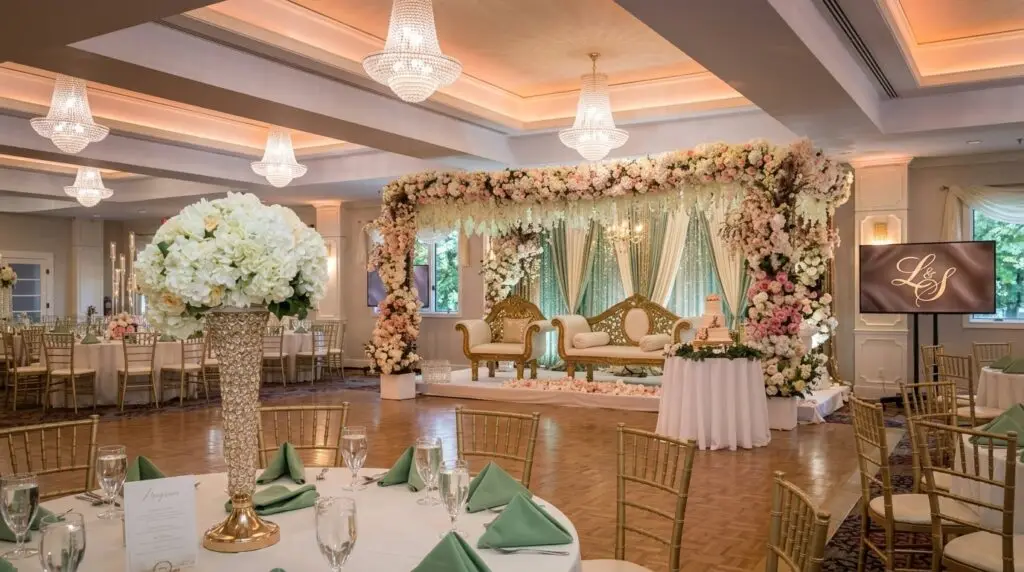
The newly renovated venue sits on nearly nine landscaped acres in the Watchung Mountains and overlooks Washington Valley. Its wedding spaces include an outdoor terrace for ceremonies and a grand ballroom for receptions.
The property also offers customizable spaces that may support:
- Indoor and outdoor wedding celebrations
- Ceremony and reception arrangements at one property
- Spacious bridal suites
- Custom room layouts
- Ceremonial mandap setups
- Themed food-truck experiences
- Cultural wedding traditions
- Dedicated event coordination
These flexible spaces may appeal to couples seeking a scenic Central Jersey wedding venue that can support both traditional and personalized celebrations.
Wedding package contents may vary according to the event date, guest count, menu, and selected services. Couples should confirm all inclusions, restrictions, upgrades, and fees in their current written proposal.
What Should You Examine During a Venue Tour?
A venue tour should show how the property functions throughout a real wedding day, not only how the rooms look when empty.
Ask the coordinator to explain the event chronologically, beginning with vendor arrival and ending with final cleanup.
Pay attention to:
- Ceremony-to-cocktail-hour flow
- Reception capacity after adding a dance floor
- Indoor weather backup
- Wedding-party preparation spaces
- Guest entrances
- Restroom locations
- Accessibility
- Bar placement
- Catering access
- Photography locations
- Parking
- Privacy from other events
- Sound and time restrictions
Always ask to see the actual weather-backup space. It should feel like a suitable alternative rather than an improvised solution.
Questions to Ask Before Signing a Wedding Venue Contract
Before committing to a venue, ask:
- What exactly is included in the package?
- Which services require an additional charge?
- Is the ceremony space included?
- What is the indoor weather plan?
- Can the menu accommodate dietary and cultural requirements?
- Are tables, chairs, linens, and place settings included?
- Are outside vendors permitted?
- What does the venue coordinator manage?
- Are taxes, service charges, and gratuities separate?
- Is there a guest-count or food-and-beverage minimum?
- When is the final guest count required?
- How much setup and cleanup time is included?
- What happens if the reception runs late?
- Are other events hosted at the property at the same time?
- Can the venue provide a complete written estimate?
Plan a Wedding That Feels Celebrated, Not Managed
The right all-inclusive wedding venue does more than place several services into one package.
It creates a connected experience in which the venue, catering, staffing, setup, and timeline support one another.
This coordination can help couples understand major expenses, reduce vendor communication, protect the wedding-day schedule, and spend more time experiencing the celebration.
Couples considering Martinsville Gardens can schedule a venue tour, explore the wedding gallery, and request access to the current pricing guide. When submitting an inquiry, include:
- Preferred wedding date
- An alternative date
- Estimated guest count
- Ceremony preference
- Indoor or outdoor preference
- Menu requirements
- Cultural traditions
- Bar preferences
- Accessibility needs
To discuss available dates and wedding options, contact:
Martinsville Gardens
1801 Washington Valley Road
Martinsville, Bridgewater Township, NJ 08836
Phone: 973-221-6450
Email: contact@martinsvillegardens.com
Frequently Asked Questions
What is included in an all-inclusive wedding venue package?
An all-inclusive wedding package may include ceremony and reception spaces, catering, beverage service, staffing, rentals, setup, cleanup, and venue coordination. Exact inclusions vary, so couples should request a written breakdown from the venue.
Are all-inclusive wedding venues in New Jersey cheaper?
Not necessarily. Bundled packages can make the total cost easier to calculate because several essential services are included in one proposal. Couples should compare complete estimates that include taxes, service charges, gratuities, minimums, and upgrades.
Can an all-inclusive wedding be customized?
Many venues allow couples to personalize menus, ceremony arrangements, reception layouts, beverages, décor, entertainment, and cultural traditions. The level of flexibility depends on the venue and selected package.
Is a venue coordinator the same as a wedding planner?
No. A venue coordinator primarily manages the venue, its staff, catering schedule, and property-related logistics. A full-service wedding planner may oversee the complete planning process and coordinate outside vendors, design, transportation, and personal schedules.
Can cultural wedding traditions be accommodated?
Flexible wedding venues may support cultural ceremonies, specialty menus, custom layouts, ceremonial structures, and other traditions. Couples should discuss their specific requirements with the venue before signing a contract.
How can couples receive an accurate wedding venue estimate?
Provide the venue with your preferred date, estimated guest count, ceremony plan, menu needs, bar preferences, cultural requirements, and desired event duration. Ask for taxes, service charges, minimums, optional upgrades, and exclusions to be shown in writing.